SpyderEdgeForever wrote: ↑Wed Oct 02, 2024 10:01 pmVivi I really need to get in on this. I appreciate you taking the time to post these. I need to improve my sharpening skills, I'm still a novice at it after all these years of knife use and collecting. Your videos and posts are great. One of the major issues is that I don't want to accidentally damage or scratch up the blade edges and finish if I sharpen it wrong. As an example I recently did some free hand sharpening using one of those Work Sharp devices. I started to feel a sharper edge in testing it, but, I also scratched some of the finish, too.
I've learned to not worry about that. An old karate instructor used to say something like "don't let the pursuit of perfect keep you from doing something great."
Others suggested taping the blade, and that can help. If I'm doing a special knife for a customer, I go slow and use bench stones rather than my belt sander.
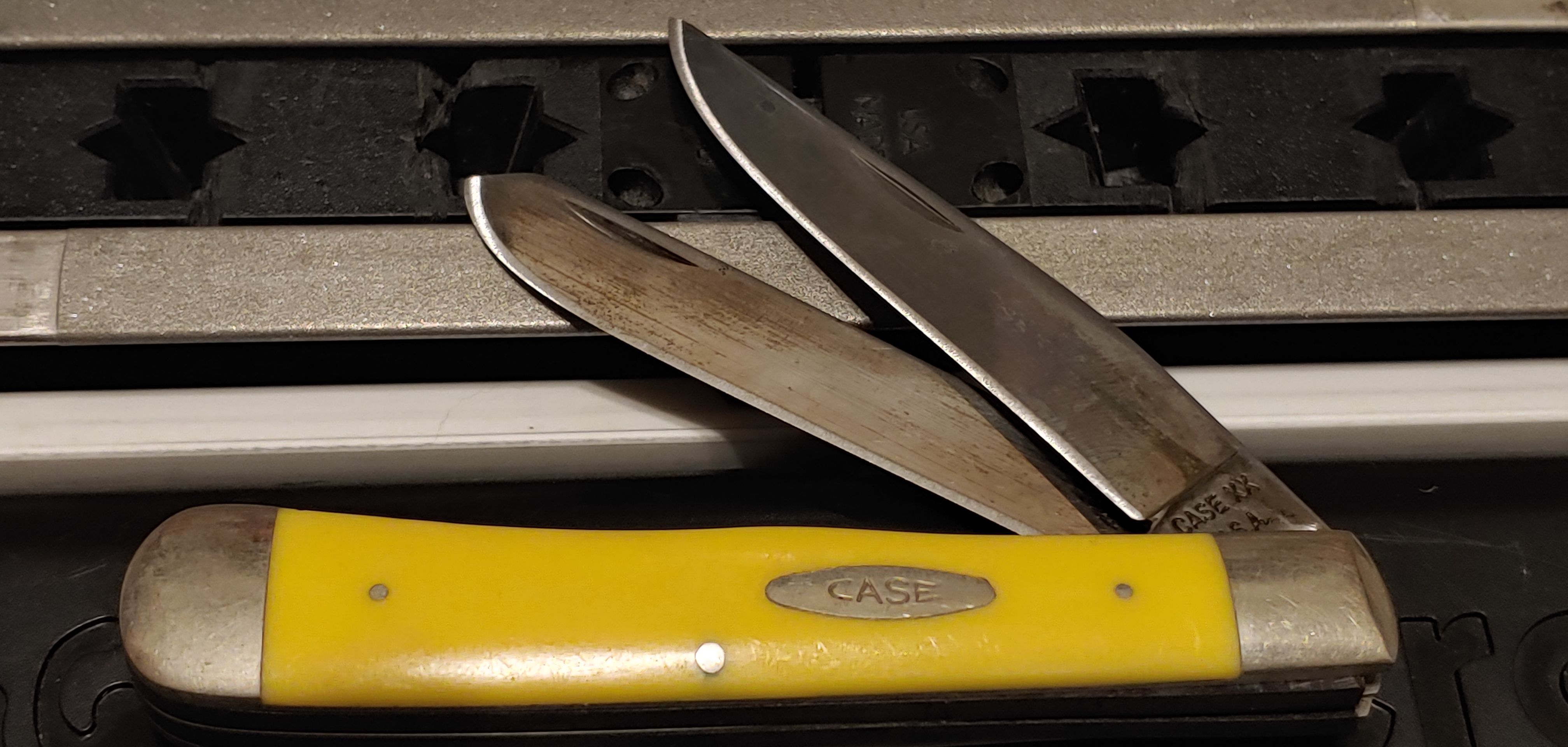
I mess my knives up all the time, despite my experience level. But they cut circles around their factory edges.
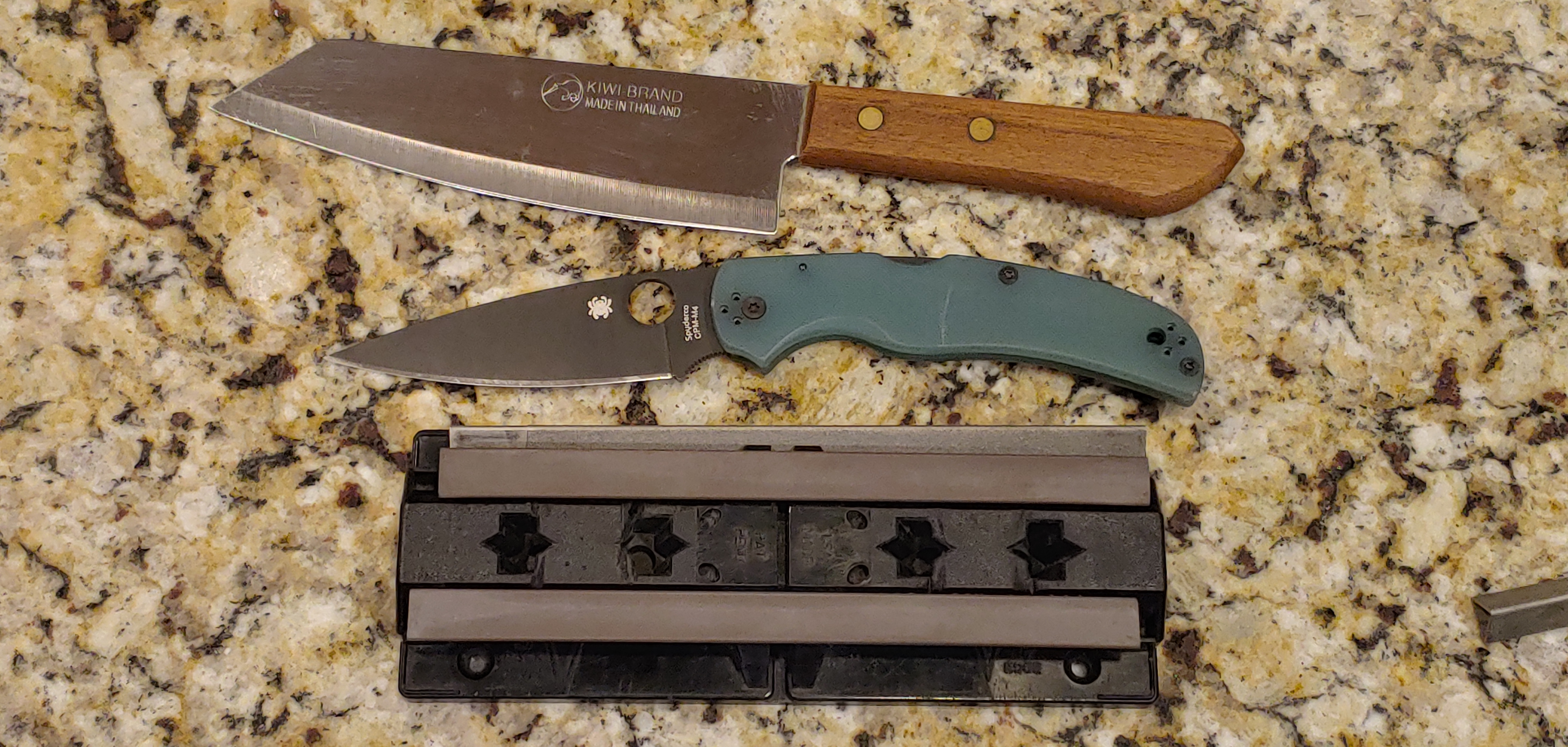
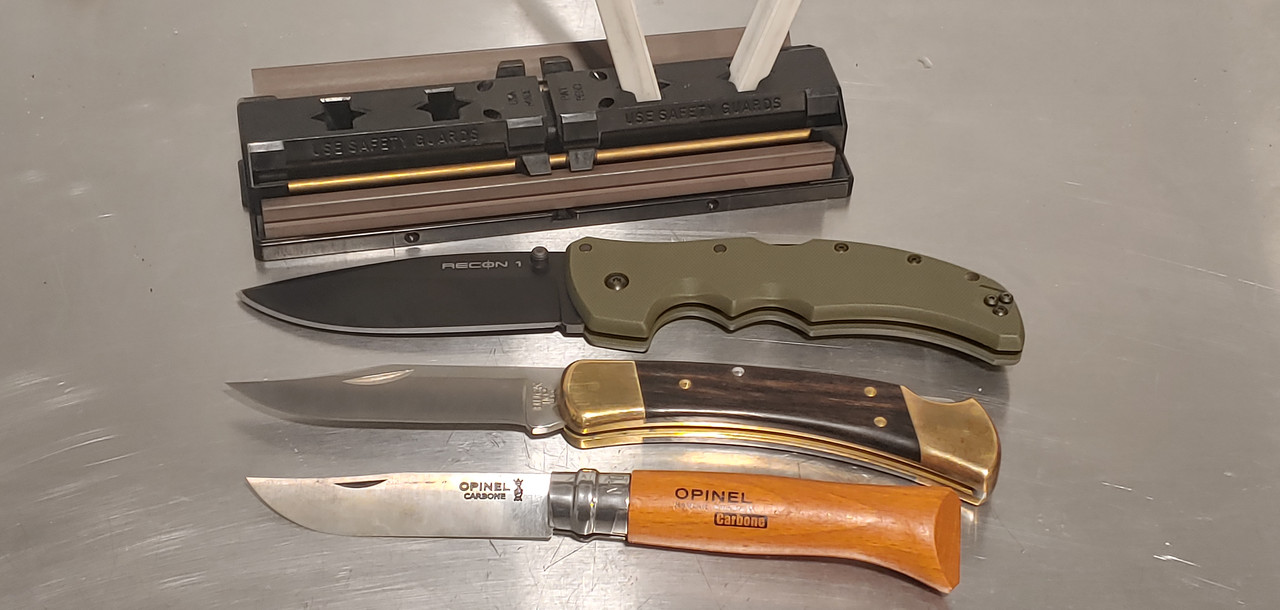
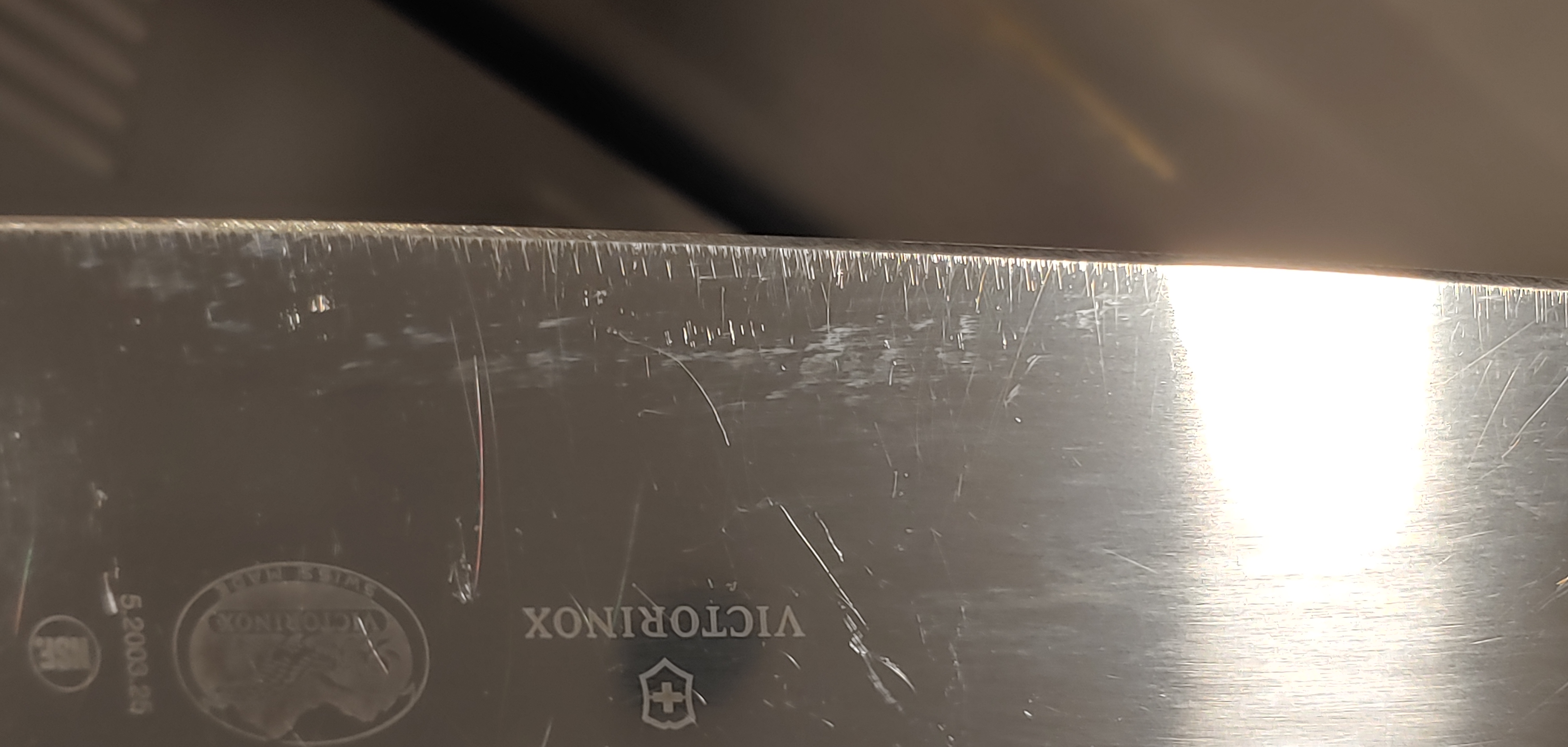
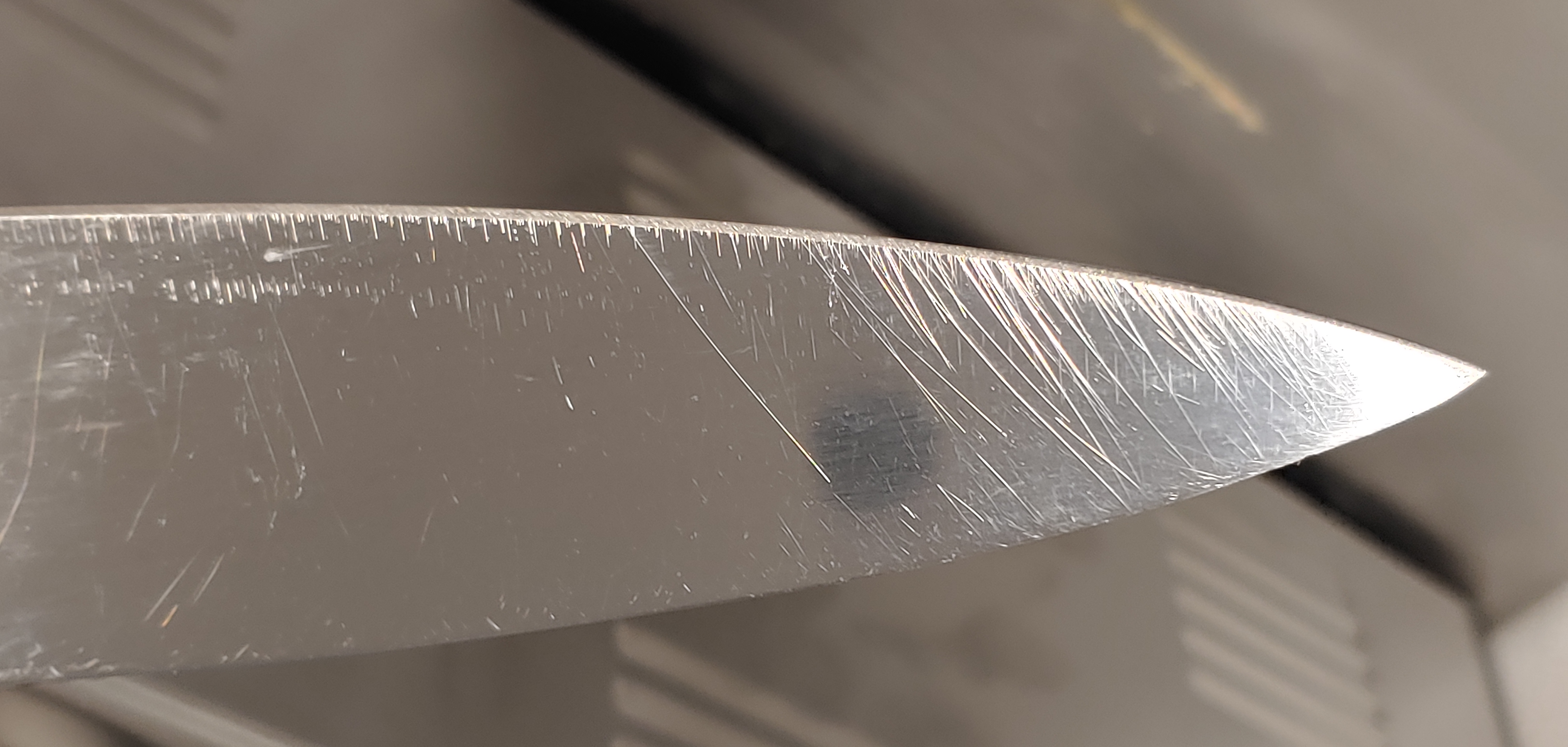
Here's the chef knife I use at work most days. An old beater Victorinox that's got scratches from both a belt sander and from hand sharpening on short 6" diamond stones (10" blade).
Then here's todays carry, a Recon 1. If you look close you can see I ground the ricasso a bit, getting sloppy on my bench stones:
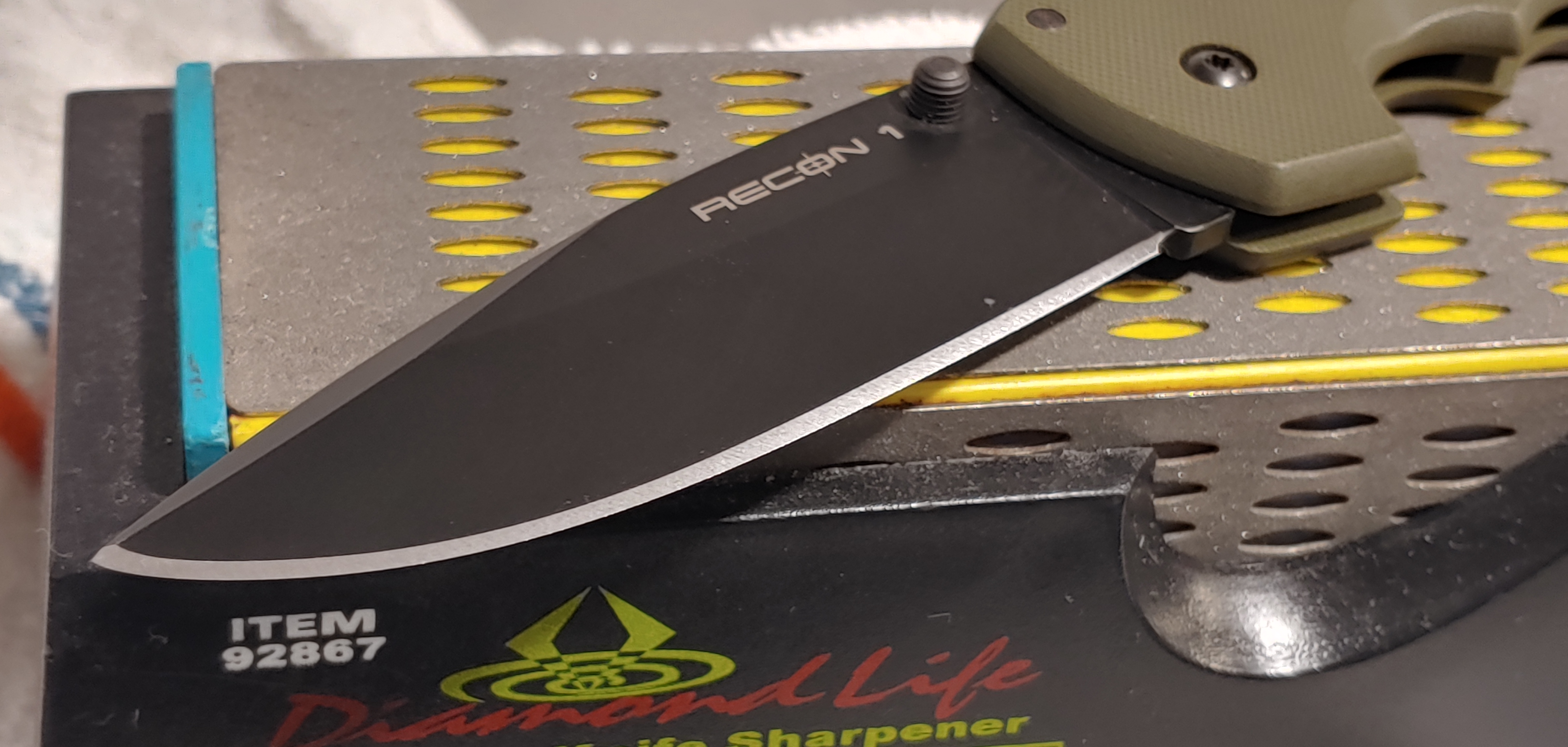
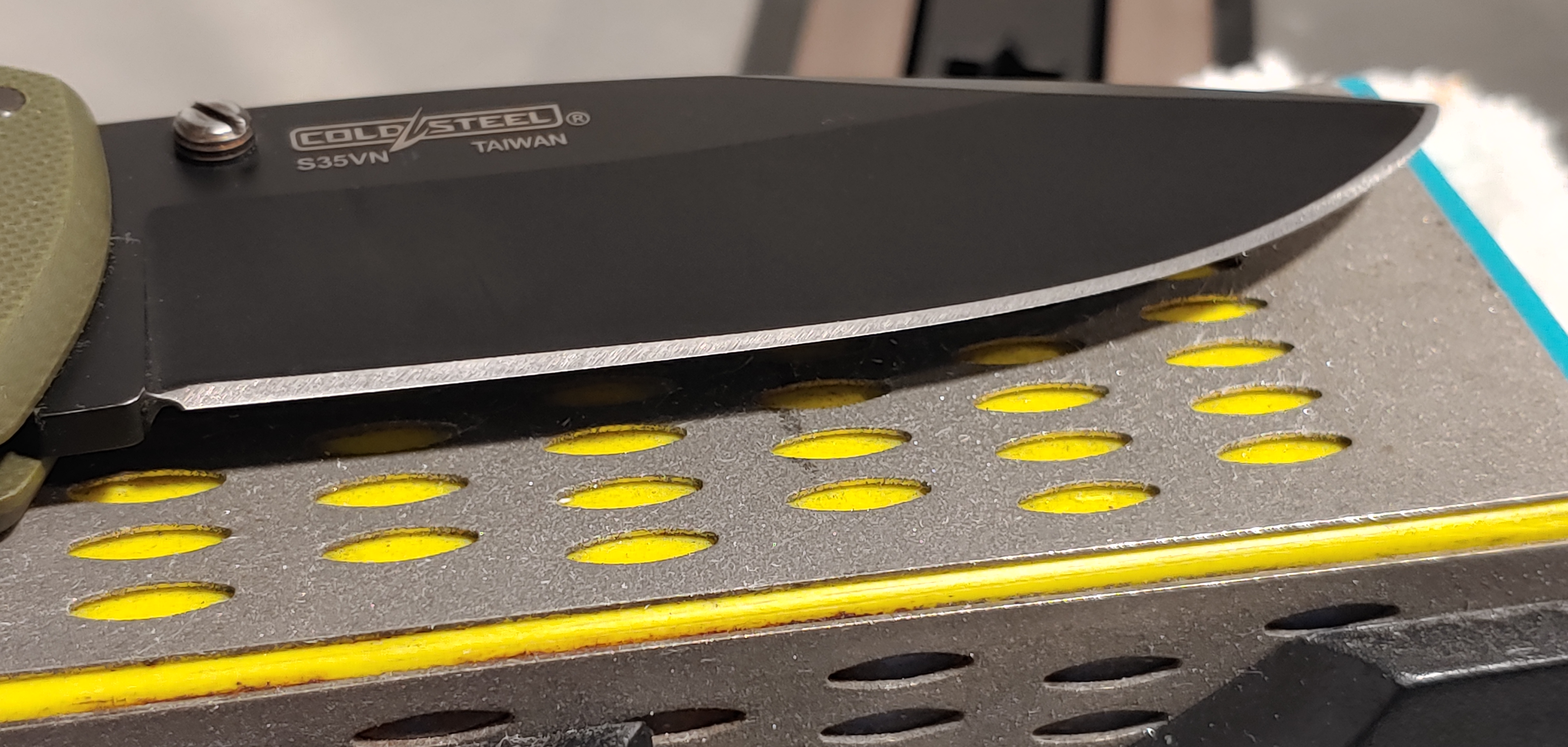
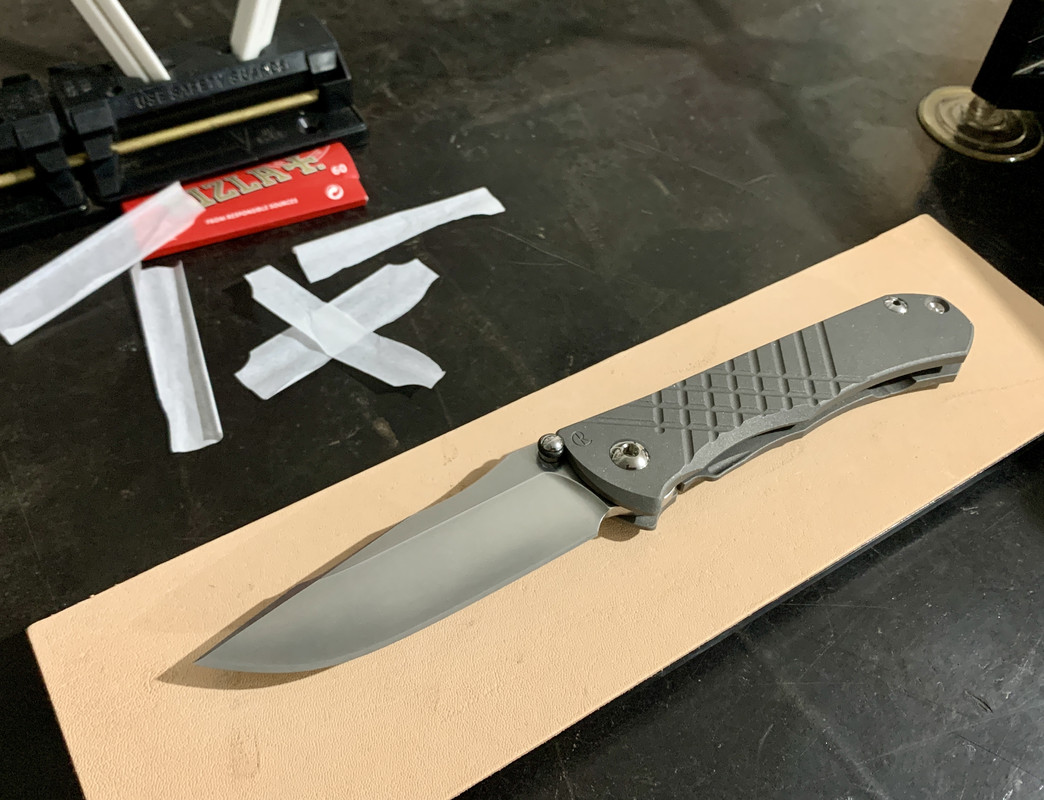
I carried my Military folder instead of the Recon for a few days this past week, and I noticed a difference in how easily they each cut through cardboard. So I thinned the Recon out a bit more on a harbor freight diamond stone, starting on 200 grit then refining the bevel on 300 grit.
Two strokes per side on the fine sharpmaker rod corners using the smallest amount of pressure possible. Tuned the edge a little more towards push cutting than I usually do, but there are still small remains of teeth on the edge to give it a nice bite when slicing.
The ESEE 4 was much quicker in comparison. I keep the edge a bit on the thicker side intentionally, though it is definitely thinner than the factory edge, which cuts poorly when carving wood. I simply did ~8 strokes per side on the fine rod corners, then the same number on the flats. Alternating of course.
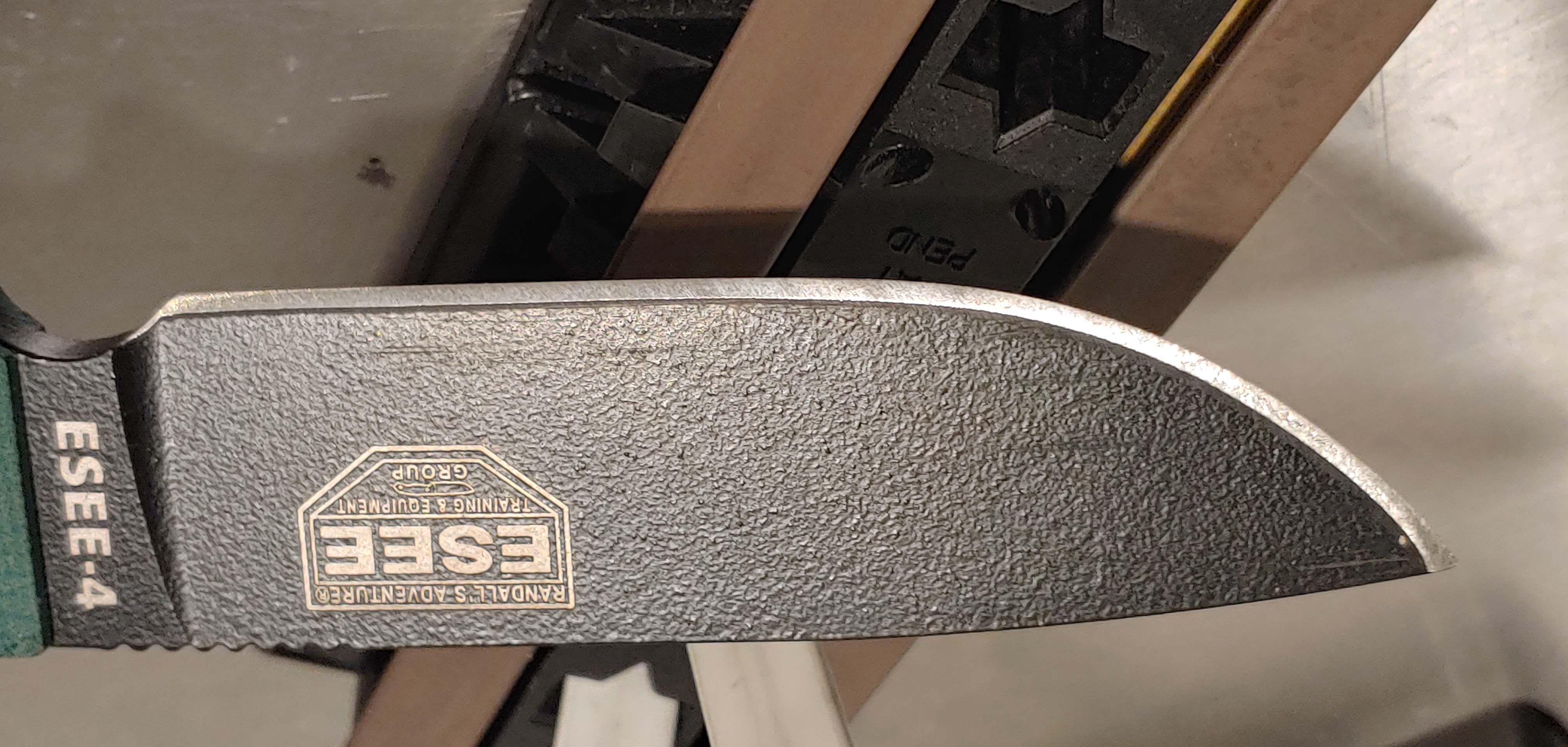
I always use the following as an example of how light your sharpmaker strokes should be:
https://streamff.com/v/be2aba5a
Sharpmaker placed on a smooth stainless steel counter top. Not secured with my off hand, a wet towel underneath or anything else. Sharpening a fairly heavy knife.
If you can't do this without moving the base when doing your finishing strokes, you're pushing too hard.
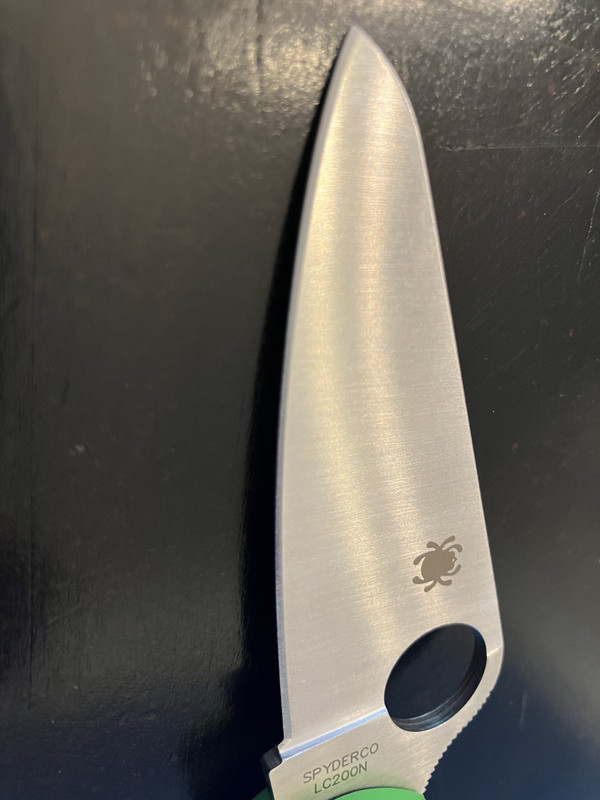
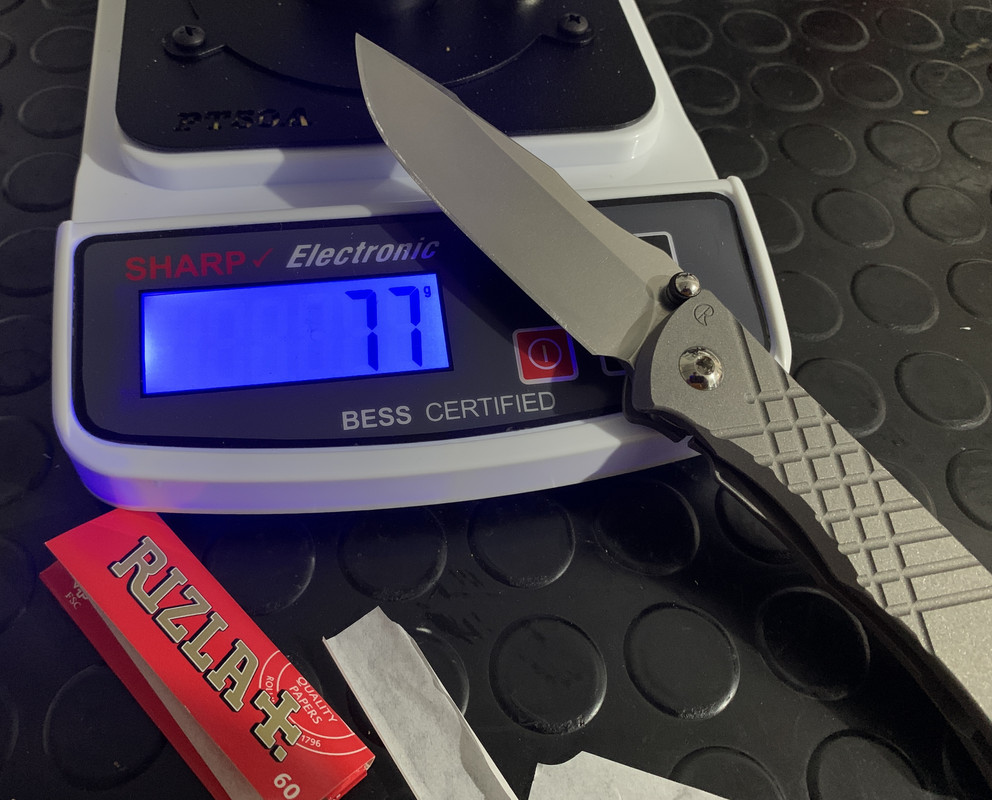
Do it this way and make sure your stones are clean (bar keepers friend + green scouring pad) and your knives will pop off arm hairs without contacting the skin too, like this ESEE does now.