traditional african spydie? any interest?
Posted: Sun Feb 25, 2007 9:59 pm
i'm curious -- who'd be interested in a spydie folder based on a traditional african design?
when i lived in zambia, i bought quite a lot of knives made by the chokwe tribe. they're a crucial part of the culture, as well as agricultural practices... people use the same blades to cut cassava stalks for planting, to butcher LARGE game, and to cut kitchen vegetables. it is said a chokwe man is not comfortable moving through the bush without a knife. perhaps the most interesting usage of knives out there, though, was in the circumcision camps, which continue in secret, even though they're illegal. (i was fortunate enough to visit some and talk about HIV/AIDS). traditionally, mukanda, or circumcision camp, begins with a song accusing the elder who performs the cutting rights of being too old, of having a knife that is too dull... he answers by saying his knife is sharp as ever, so bring forth the young boys!
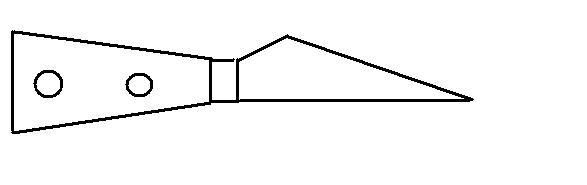
don't have any of my chokwe knives with me in virginia, and i'm not too good at knife pictures anyway... but the design has a triangular handle, a full flat ground blade (forged from a large nail, or scrap metal), and a good tip. there are even indexing holes drilled into the handle, and a full tang through the handle!
thus far, spyderco's "ethnic" series (persian, karambit, kris, etc...) doesn't represent africa at all... not only is this the "cradle of civilization," and the birthplace of some of the earliest flaked knives and stone tools, it's a place where the same traditional designs HUNDREDS of years old are still used for EDC.
the knifemaker in my village, who was, at the age of 50-something, considered VERY old and wise, told me that a knife with a blade shorter than about 4" was useless. most of my chokwe knives had 4-5" blades, though i also had one the size of my forearm. i used them ALL the time around the house, and would also carry them in the bush, or while travelling. traditionally chokwes are said to be the finest knifemakers in the sub-saharan world... they refused to trade for knives from the portuguese in angola, because their traditional designs out-performed european designs.
here's what i propose... anyone else interested?
-- H1 blade (to deal with the 7 month rainy season chokwes face... they don't bother to clean rust off of their blades...)
-- 4" blade, 4.5" would be even better
-- full flat grind
-- nestled steel liners in FRN, to keep down weight, but to maintain strength
-- indexing points
-- strong enough for light chopping, heavy cutting, and aggressive slicing, but with a tip suited to detailed cuts.
-- a survival whistle in the handle... chokwes traditionally used whistles for communicating in the bush.
possible names (in chokwe):
tuuta -- giant bush rat (a clever animal said to be good luck)
mpoko -- knife
tanga-tanga -- a type of poisonous spider
as an "mbasela" ("bonus"), i think it would be great if an african-themed knife somehow benefited the people of the country from which the design came... i personally wouldn't object to paying $10 more if this money were to go towards funding sustainable development projects or HIV/AIDS education in africa. $10 is a LOT of money in rural zambia... if you even made and sold just 1,000 knives, you'd have a small fortune that would do an astonishing amount of good (providing it was paired with the right program).
anyone else interested??? there'd be nothing else like it on the market...
when i lived in zambia, i bought quite a lot of knives made by the chokwe tribe. they're a crucial part of the culture, as well as agricultural practices... people use the same blades to cut cassava stalks for planting, to butcher LARGE game, and to cut kitchen vegetables. it is said a chokwe man is not comfortable moving through the bush without a knife. perhaps the most interesting usage of knives out there, though, was in the circumcision camps, which continue in secret, even though they're illegal. (i was fortunate enough to visit some and talk about HIV/AIDS). traditionally, mukanda, or circumcision camp, begins with a song accusing the elder who performs the cutting rights of being too old, of having a knife that is too dull... he answers by saying his knife is sharp as ever, so bring forth the young boys!
don't have any of my chokwe knives with me in virginia, and i'm not too good at knife pictures anyway... but the design has a triangular handle, a full flat ground blade (forged from a large nail, or scrap metal), and a good tip. there are even indexing holes drilled into the handle, and a full tang through the handle!
thus far, spyderco's "ethnic" series (persian, karambit, kris, etc...) doesn't represent africa at all... not only is this the "cradle of civilization," and the birthplace of some of the earliest flaked knives and stone tools, it's a place where the same traditional designs HUNDREDS of years old are still used for EDC.
the knifemaker in my village, who was, at the age of 50-something, considered VERY old and wise, told me that a knife with a blade shorter than about 4" was useless. most of my chokwe knives had 4-5" blades, though i also had one the size of my forearm. i used them ALL the time around the house, and would also carry them in the bush, or while travelling. traditionally chokwes are said to be the finest knifemakers in the sub-saharan world... they refused to trade for knives from the portuguese in angola, because their traditional designs out-performed european designs.
here's what i propose... anyone else interested?
-- H1 blade (to deal with the 7 month rainy season chokwes face... they don't bother to clean rust off of their blades...)
-- 4" blade, 4.5" would be even better
-- full flat grind
-- nestled steel liners in FRN, to keep down weight, but to maintain strength
-- indexing points
-- strong enough for light chopping, heavy cutting, and aggressive slicing, but with a tip suited to detailed cuts.
-- a survival whistle in the handle... chokwes traditionally used whistles for communicating in the bush.
possible names (in chokwe):
tuuta -- giant bush rat (a clever animal said to be good luck)
mpoko -- knife
tanga-tanga -- a type of poisonous spider
as an "mbasela" ("bonus"), i think it would be great if an african-themed knife somehow benefited the people of the country from which the design came... i personally wouldn't object to paying $10 more if this money were to go towards funding sustainable development projects or HIV/AIDS education in africa. $10 is a LOT of money in rural zambia... if you even made and sold just 1,000 knives, you'd have a small fortune that would do an astonishing amount of good (providing it was paired with the right program).
anyone else interested??? there'd be nothing else like it on the market...