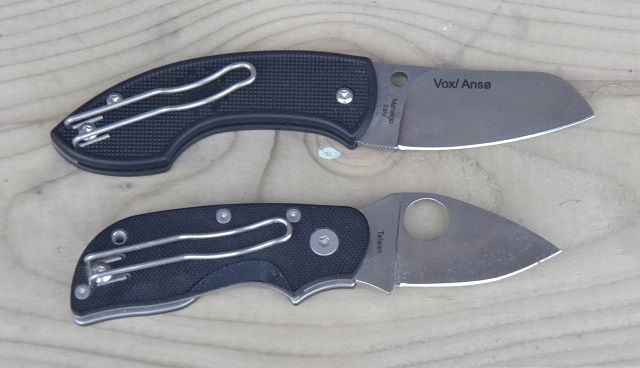
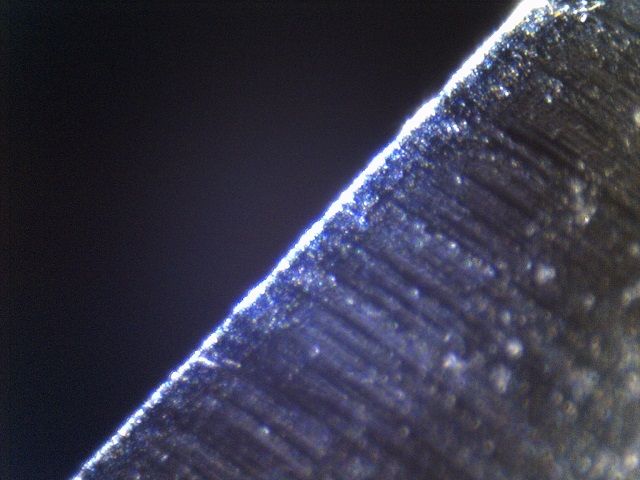
One of the nice things about really small knives is that you always have them on you and while there are certainly better knives than the Pingo for cooking, it never fails to surprise me how well a decent knife can do compared to one which is designed more optimally but it not well cared for/sharpened.
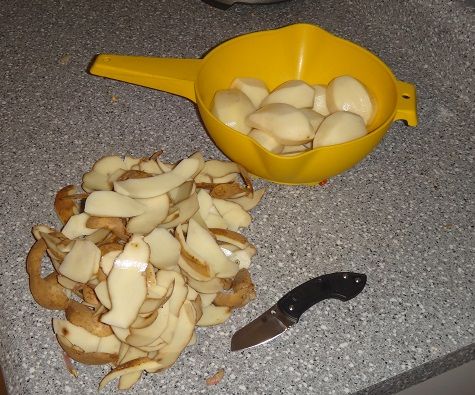
The Pingo is nice and short, fits easy in the hand and while it is a little broad for an ideal peeler, if you don't mind a bit of wastage it does well. As I carry this everywhere, and no one minds at all if you ask them if you can peel some potatoes for them, I started to realize just how important sharpness is for that. The Pingo was only outperformed once when used for it at friends/family and it was because I recently sharpened their knives.
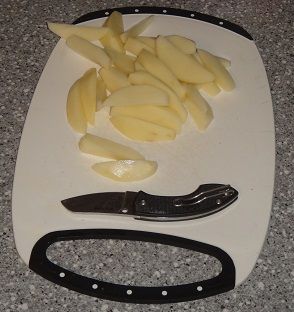
Now anyone who is Irish might likely call Shenanigans here because those are white potatoes which are very soft and easy to cut compared to blue or red, and if you are really into potatoes you can even tell from the peels that they are a bit old and are soft. But still, the main issue I had was one of size of the blade. The Pingo was a bit short for anything but the smallest potatoes but still at most that made me have to do two cuts instead of one.
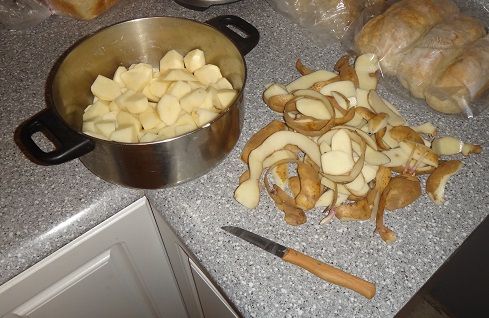
Now if you break out an actual optimal paring knife, that one is from Robert Herder and is fully grind optimized.

Or you use a more sensible design such as that Henckels which was custom reground - well in those cases the Pingo can be awkward in comparison. But still if you are only doing a couple of dozen, and you are not looking for precise shapes but just to get the vegetables into smaller pieces, well frankly the difference is very small. It would be similar to walking to the store with work boots on vs sneakers.
The only thing which jumps out at me is that the edge angle is a bit high for this small knife, but with the angle where it is, it is a bit less likely to be notched when used by a friend/family to cut something rough like cardboard full of staples or a piece of tyvek layed across a concrete floor.