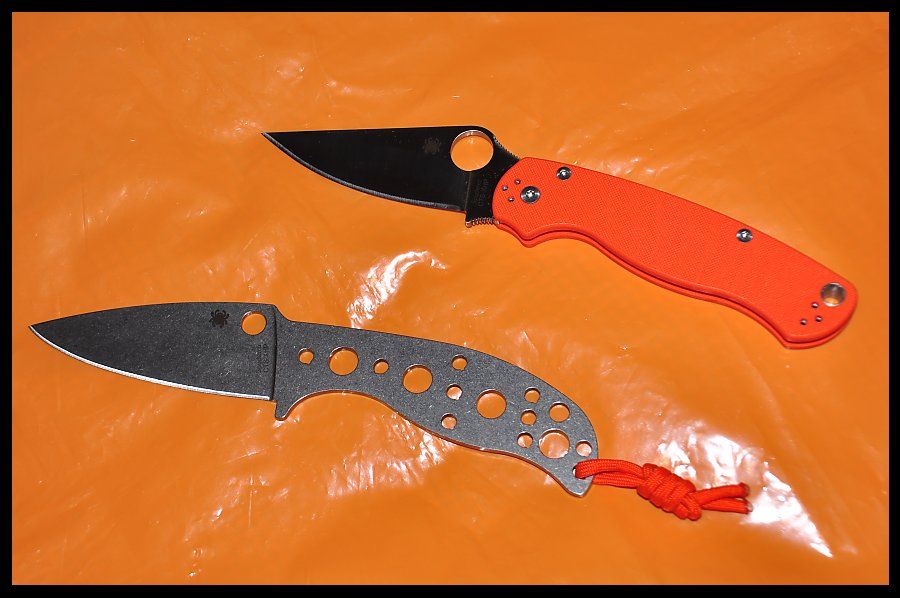
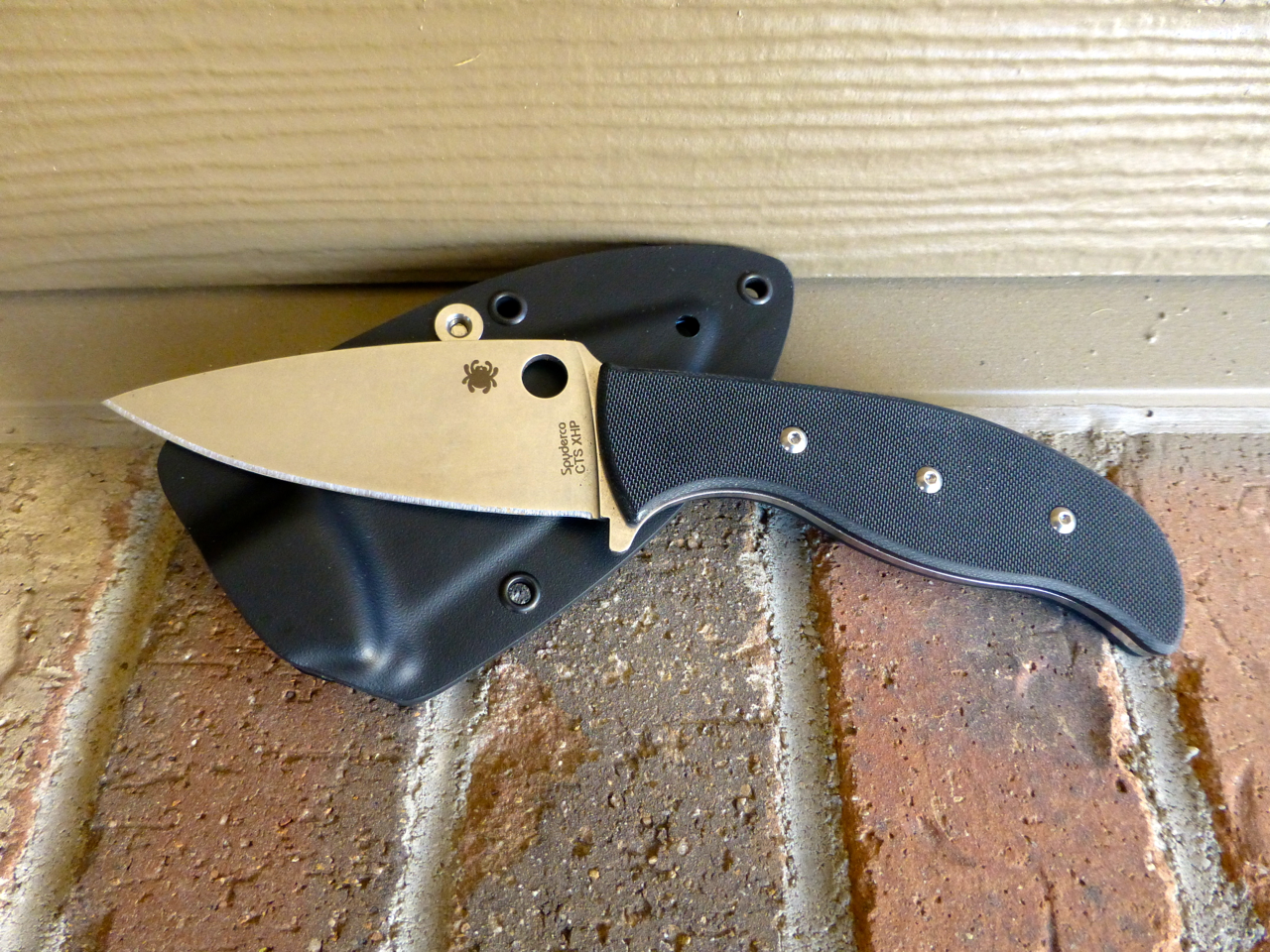
akaAK wrote:Rub the G10 with mineral oil. Makes G10 look brand new. Mineral oil is also non-toxic and food safe.
RoBoTech wrote:Wash it good with hot water and dish soap. Dry. Then soak it overnight with WD-40.
This works well, but for a better and longer lasting finish, wash AGAIN, and soak again for another night.
Then just use a lint free cloth to wipe it down and polish when you are done.
Thanks akaAK and RoBoTech, i'll try your tips!
"The things you own end up owning you."
Tyler, Fight Club
jabba359 wrote:Dang, Ted, that is some nice Birch! I may have to order some to try out on one of my mules.
Thanks, Jabba! I got this particular piece from Mark at Burl Source - who always has top-quality stuff. Make sure to look for "Karelian Birch" or "Masur Birch" - which have the interesting figure in the wood. Other birch scales can show plain figure, quilting, and curly figure - but only rarely burl patterns. You can find some good Birch at Thompsons Scandinavian Knives and on the 'Bay as well.
potterma wrote:I've finally gotten some time to sneak some Mules into the mix... :)
Next is contoured carbon fiber with matte finish.
I just bought my first Mule (M390) and these are EXACTLY what I'm looking for in sides! I hope you can make me a set for the satin cf with a thin blue liner!!!
phillipsted wrote:This is my latest Mule project - I put some Karelian Birch scales on the new XHP Mule. I understand why so many Scandinavian knives use Birch for their scales - the material is drop-dead gorgeous, it is fantastic to work with, it is relatively light weight while being tough as nails. Great stuff. It worked very easily, responded well to shaping with files, and finished out nicely with sandpaper. It wasn't chippy or splintery - but you can probably see that there are several very voids in the dark spots. None of these voids caused any chip outs or other problems, and they sealed up nicely. I finished the birch with about 15 thin coats of Tru-Oil with a top coat of RenWax.
+ 1 on that I have a commission in birch looks nothing like that although I think its spalted beautiful wood though is there any reason you don't use liners ted .
I know some folk like the option of removing the scales which would make sense not a criticism but just curious.
Bladekeeper, this particular species of Birch (often called "Karelian" or "Masur) frequently has this type of funky pattern in the grain. I've seen several different posts of why it happens, but nothing seems definitive. This was some of the best Birch I've seen in a long time, though...
As far as liners go - I have used them in the past - vulcanized material, G-10, GITD, even thin Micarta. I'm just not fond of the look. Nothing against it, I'm just a big fan of the wood itself. And since I'm creating these as a hobby, I focus mainly on finishing out the wood.
I generally make all my scales bolted and removable so that I can swap them out over time. One of these days, I may post a few of my older ones for trade/sale on K-BST since I'm starting to build up a collection of un-mounted Mule Scales in my drawer...
I'll be posting my newest Mule this weekend. It is the XHP with Camel Thorn scales, a leather lanyard and Spydie Bead. I hadn't used Camel Thorn before - very dense, oily and hard. It is an African desert Acacia species, related to Mulga and Arizona Ironwood. Interesting, and extremely beautiful stuff - I wish it was more widely available...
I read recently although couldn't say if this is the case that excessive burl patterns form when the tree cannot recover from the wound and is sick/dying .
I don't know if this is true but its my understanding a burl is caused by a wound/damage to the tree and forms a large growth over the damage.
If this is the case then I suppose the excessive burls are more expensive and rare as they kill the tree ?
This could be totally untrue it was a German site using a translation so sometimes a lot is misinterpreted lovely wood I recently brought some elm burl.
The quality is fantastic and is going on a spyderco woodcraft ill try and get it posted when its done.
Ted a source for this wood camel thorn direct from Africa africeye@gmail.com it may be more expensive to get but its in stock .
Just a thought .
Looking at some info it seems virus, insect infestation can all cause such burls also as I presumed forcing can be done using sharp blades.
Although there doesn't seem to be any definitive reason its an interesting subject that would be worth looking into.
I have a staff from a peach tree it has a 720• twist which apparently took over 50 years to form its lovely I used it as a walking stick after I had a bad accident.
And was stopped all the time with folk asking where I got it it came from china I belive and I found it at a wood fete paid about 60$.
I just finished my latest XHP Mule this week. As noted in the postings above, this is Camel Thorn wood from southern Africa. This stuff is very dense, very hard, and very oily - I couldn't use the sander on it because the heat burned the wood, and I had to be careful with the drill press as well. I normally lean toward burl woods, but this figured grain is really deep and interesting. I exposed the thong hole in the back and attached a lanyard made from 3mm brown leather, capped off with a square Spydie bead and a diamond knot.
I also made some advancements in the scale attachment. The Amazon Supply site has a bunch of very small "bearing race" washers in very small sizes - and I found some 0.033" thick washers that snugly fit the 0.25" counterbored hole for the pivot bolts. It gives the handles a nice finished look.
Holland wrote:now u just need orange g10 handles for the mule
definitely! waiting for halpern titanium's site to go back up. i'm interested in the option 4 (similar to your orange one). yours fits flush with the tang (at least from the two pics in your sig/thread that i saw) - is this usually the case? i'm trying to decide whether to send it to a custom maker instead to get a good flush fit if that's not the case with halpern titanium.
JV3 wrote:definitely! waiting for halpern titanium's site to go back up. i'm interested in the option 4 (similar to your orange one).
I tried to order the orange scales for my mule about a month ago and they were out of stock. I went with the black option 5 for the time being. I need to call back and see if they have the orange again.
thurin wrote:I tried to order the orange scales for my mule about a month ago and they were out of stock. I went with the black option 5 for the time being. I need to call back and see if they have the orange again.
they're back in stock - i ordered a set just now :)
Anybody have an idea on how difficult it is to add file work to a mule I asked somebody who was scaling one for me and suggested it'd be difficult owing to the hardness.
Any suggested methods of doing so I'm thinking regular jimping but my OCD means it'd have to be very tidy and conform to the lines .
Also would it be too much to do with files by hand ?
I'm no maker so apologise if its a noob style question .
Bladekeeper wrote:Anybody have an idea on how difficult it is to add file work to a mule I asked somebody who was scaling one for me and suggested it'd be difficult owing to the hardness.
Any suggested methods of doing so I'm thinking regular jimping but my OCD means it'd have to be very tidy and conform to the lines .
Also would it be too much to do with files by hand ?
I'm no maker so apologise if its a noob style question .
I had the same question and talked to a gentleman who does file work all the time on hardened steel knife spines. He uses a set of diamond needle files and a lot of patience. I've been meaning to try this on an old "beater" Mule to see how it looks.


 .
.