A relatively unknown model in the Spyderco Lineup, the C60 Massad Ayoob is, in my opinion, the most practical SD/EDC knife ever created. I have been carrying one off and on for the last 3 years, and it has become my EDC standard for the past year. This review encompasses my experiences and observations about the c60 gleamed over the course of the last 3 years, as well as a comparison of knives I have on hand while I’m overseas.
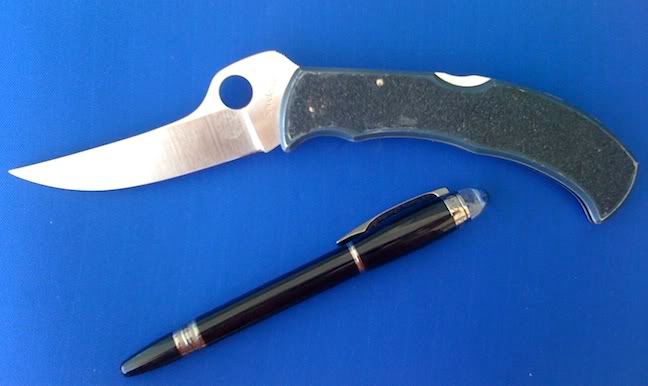
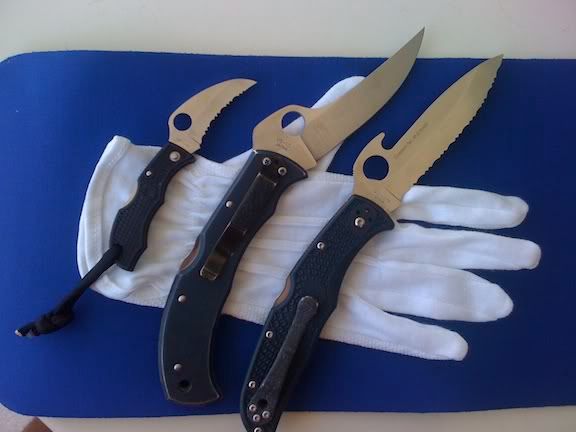
Knives used in this review:
General Information:
The C60 Massad Ayoob was a designed by world-renowned self-defense expert Massad Ayoob. Here is Mr. Ayoob’s explanation of the design.
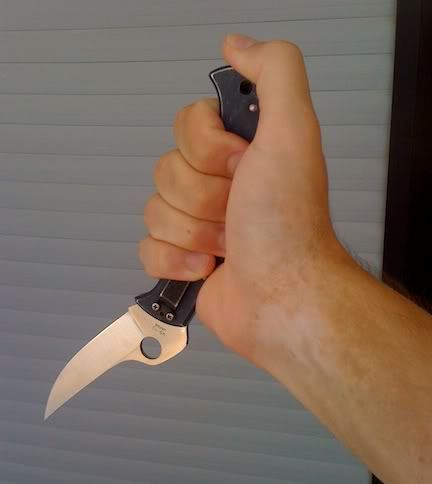
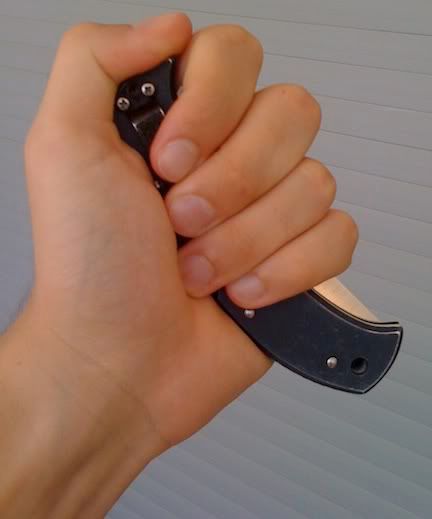
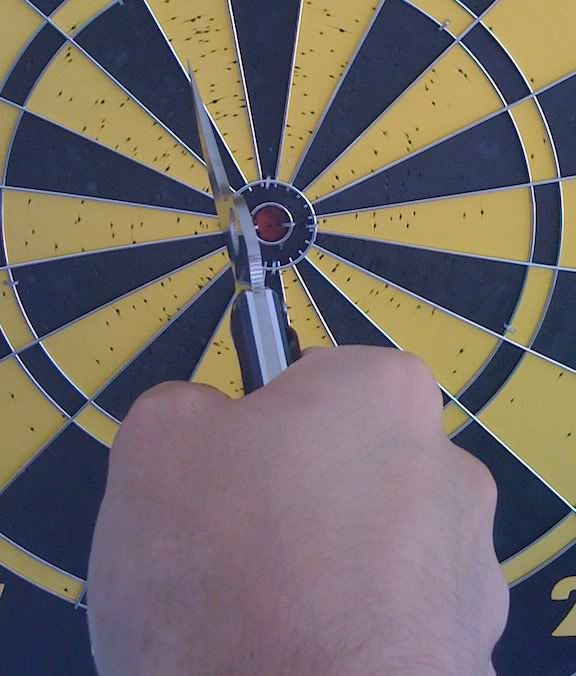
“The rationale was to get the blade directly in line with the radius bone of the forearm when the average human wrist was in the "locked" position, which puts the middle knuckle of the hand directly in line with the axis of the forearm.
This is what gives the C60 its superior stabbing accuracy that posters in this thread have mentioned, and it also gives tremendously more penetration, because it aligns the skeleto-muscular support structure of the arm with the point (number one), and therefore with anyone who knows how to put his weight behind a punch, gets the entire body's force going directly behind the point (number two).
As other posters have also noted, the handle-to-blade angle puts much more force behind a slash as well as a stab. Instead of the blade "skimming" over the target as it hits hard resistance such as bone, the 90 degree angle of the blade when held in reverse grip (and KEPT there by a handle shape that allows the thumb to lock it at that angle) the C60 is more likely to shear directly through whatever resistance it encounters. Because of the design features, something very similar happens with a slash from the conventional saber or pekal grasp.
As to the tip-down carry: I'm one of those early Spyderco fans whom Sal calls "Clipiteers," [:-)] who started their Spyderco experience with the original Police model, learned to open it with a pinch-snap, and discovered we could win bets beating guys with bali-songs and even "automatic knives" in opening speed. The pinch snap uses the gross motor movement of the closed hand instead of the more fine-motor skill of using the thumb to open the blade via the original design intent of the "Spyder-hole."
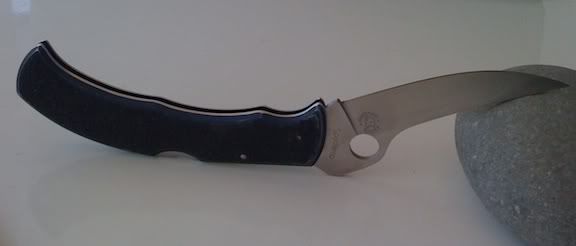
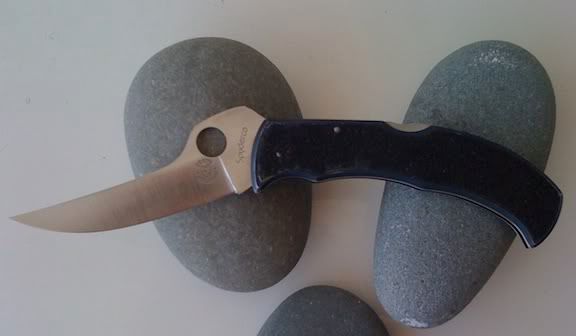
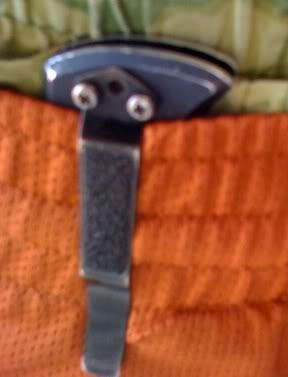
The knife first appeared in the 2001 lineup. It weighs 4.3 oz, has a 3 5/8” blade, with 3 3/8” cutting edge, is 5 1/16” closed, 8 7/16” open. It is a “Japan” knife, meaning the stamp on the VG10 tang does not say “seki city Japan.” The knife is extremely solid and precise, with no blade play whatsoever. The handle thickness is very thin, thinner than a D3, and the knife rides very low in the pocket.
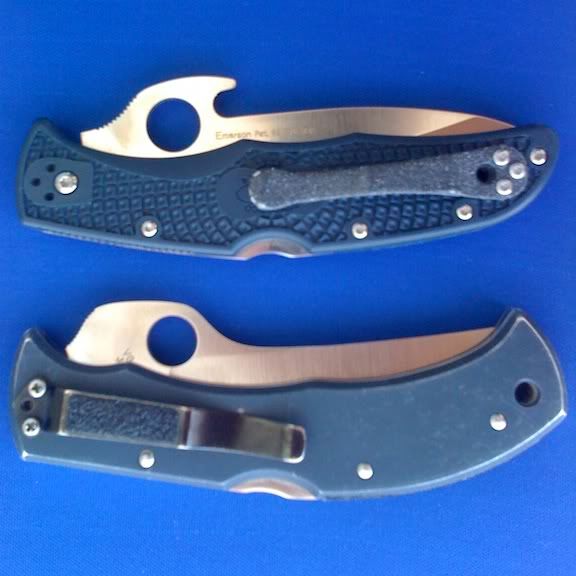
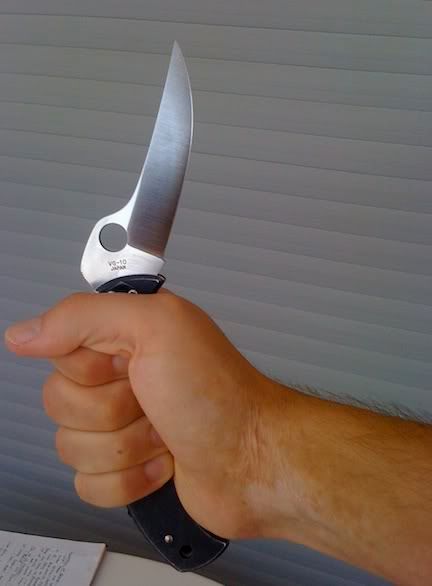
Negative blade angle- The heart and soul of what makes the Ayoob such a great knife is the negative blade angle, or NBA. The NBA what gives the Ayoob its pistol shape. The advantage of the NBA is that it aligns the point of the blade with the bones in the wrist when in locked position, just like push dagger. It also makes transitioning from a handgun to a knife in an emergency much more intuitive.
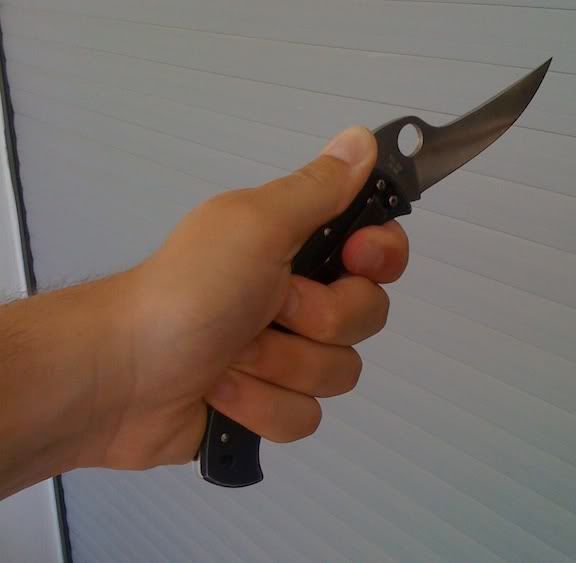
The NBA also puts the cutting edge far forward of the knuckles in the hand, giving the folder similar pull cutting power to that of a Hawkbill, but in a much more usable blade shape. NBA compared to an endura:
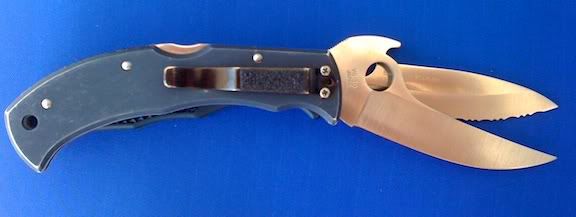
EDC use- The knife is a VG10 spyderco clipit, with all the basic performance that entails, so I will focus on the specific, unique performance characteristics of the C60.
Pull Cutting vs. Hawkbill- by far the greatest EDC strength of the Ayoob is its pull cutting power. The NBA makes the knife very ergonomic in the hand. But, what makes it truly superb is the way the NBA synergizes with the full belly of the blade.
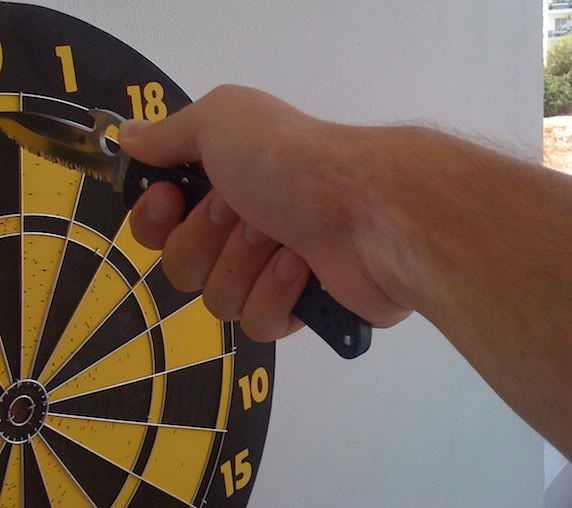
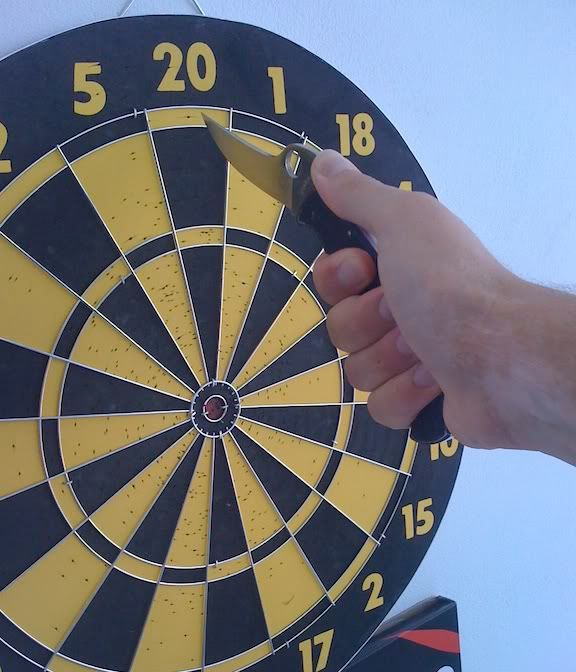
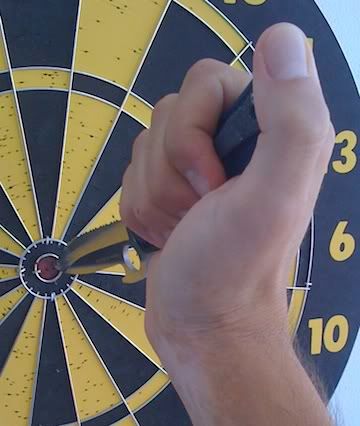
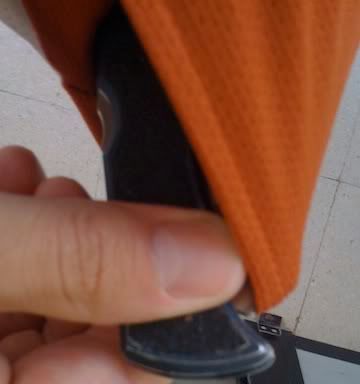
Here, without bending my wrist, I’m pressing about 1” of cutting edge onto the material.
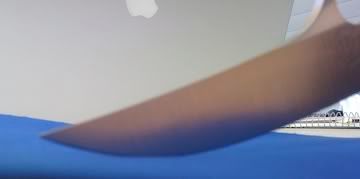
With cutting things on a flat surface with a Hawkbill, only the tip is in contact. This is a problem, because for many cutting tasks, the majority of the hawkbills blade cannot be used.
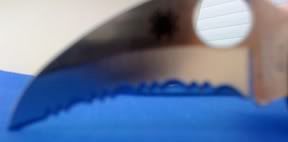
In my experience, the Ayoob offers the same intuitive, pull cutting motion of the venerable hawkbill-I have used my SE Ayoob to disassemble an old couch, and cutting was effortless and ferocious. But, when cutting materials on a flat surface, the Ayoob is far superior to the hawkbill, because much more of the cutting edge can make contact with the material, since many times with a hawkbill only the tip can be used.
The NBA of the Ayoob provides all the surefire pull cutting performance of a hawkbill, but, because it has a full-bellied blade, the knife is far more versatile and effective for general use.
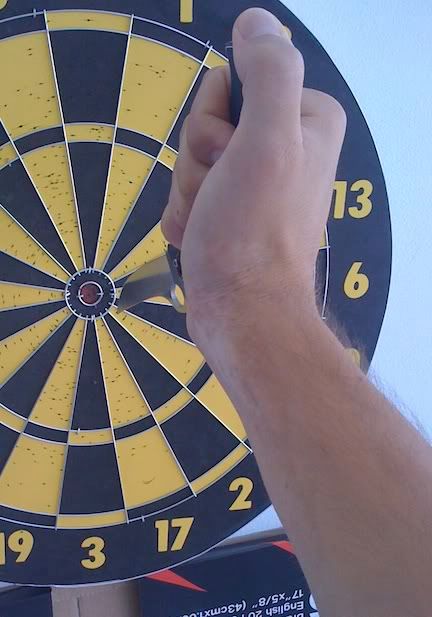
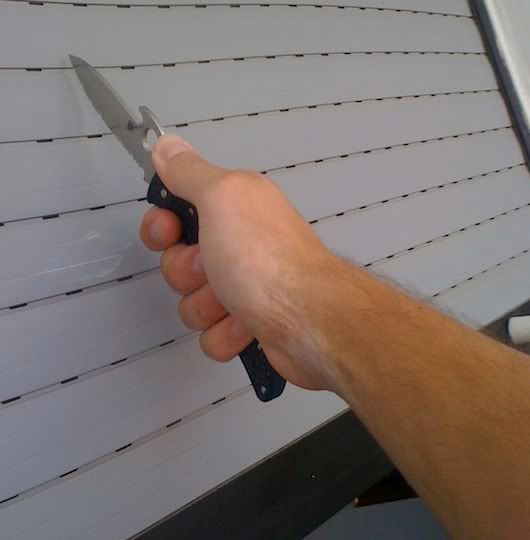
Use at high angles: The NBA of the Ayoob makes it very well suited for thrusting at shoulder height and above. But, on a more practical note, the NBA is also very comfortable for when your cutting things overhead, like wallpaper or plastic sheeting. I discovered this last winter, when I had to trim the plastic ventilation over my windows to size.
Here I am attempting to show you what I’m talking about. If this was plastic sheeting that I’m trying to cut overhead, I can press a good amount of cutting edge into the material without having to bend my wrist at an uncomfortable angle. If this were a hawkbill, only the tip would be in contact.
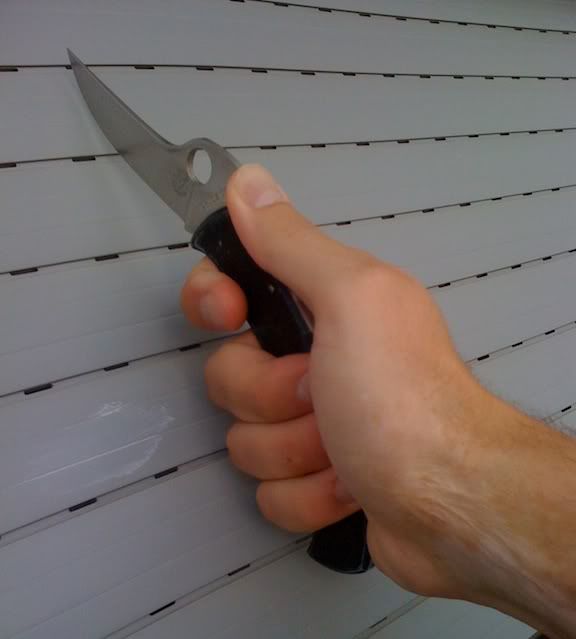
With a conventional blade shape such as the Endura, the straight blade shape makes it a bit more uncomfortable to use at this angle. And because there is less blade in front of my knuckles, it’s hard to apply as much cutting edge as I would like.
EDC conclusion- the Ayoob is easy to carry and Spyderco quality, with a large blade. So, it obviously can handle most every day carry scenarios. What’s cool though is that the negative blade angle allows the knife to have the specialized pull cutting characteristics of the hawkbill, without sacrificing any of its utility for general tasks.