-Review of my Cold Steel Air Lite-
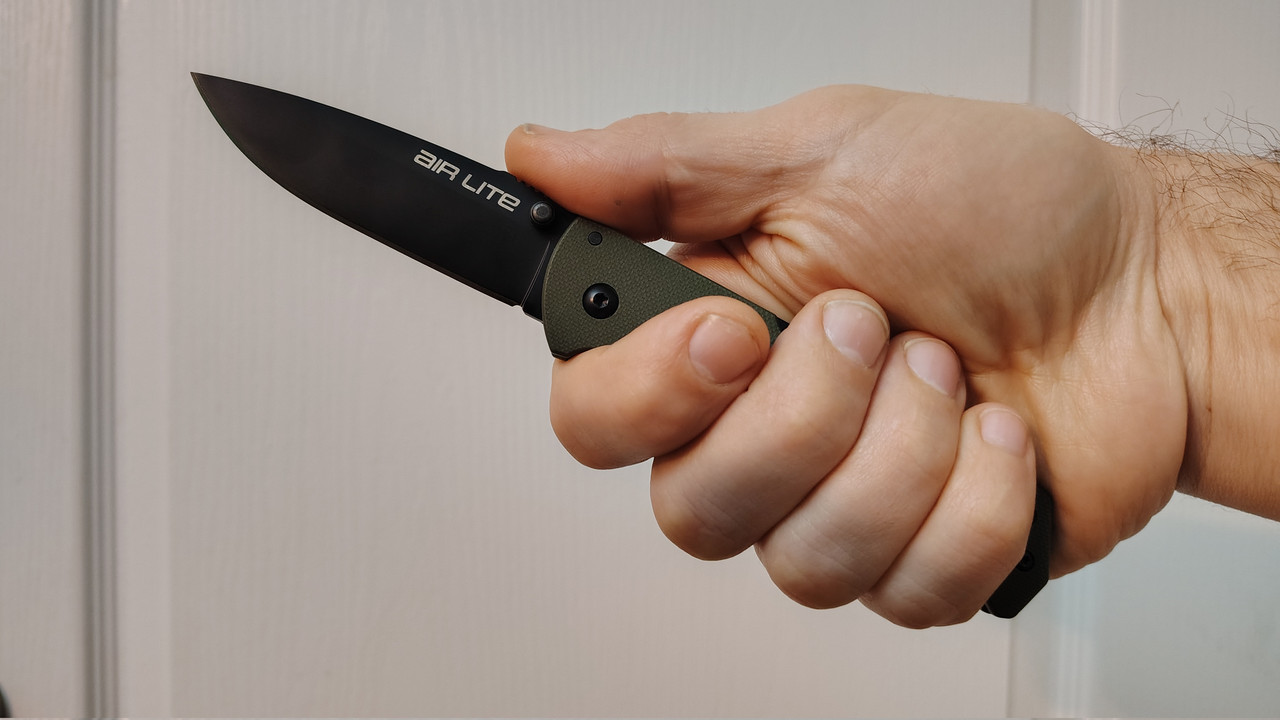
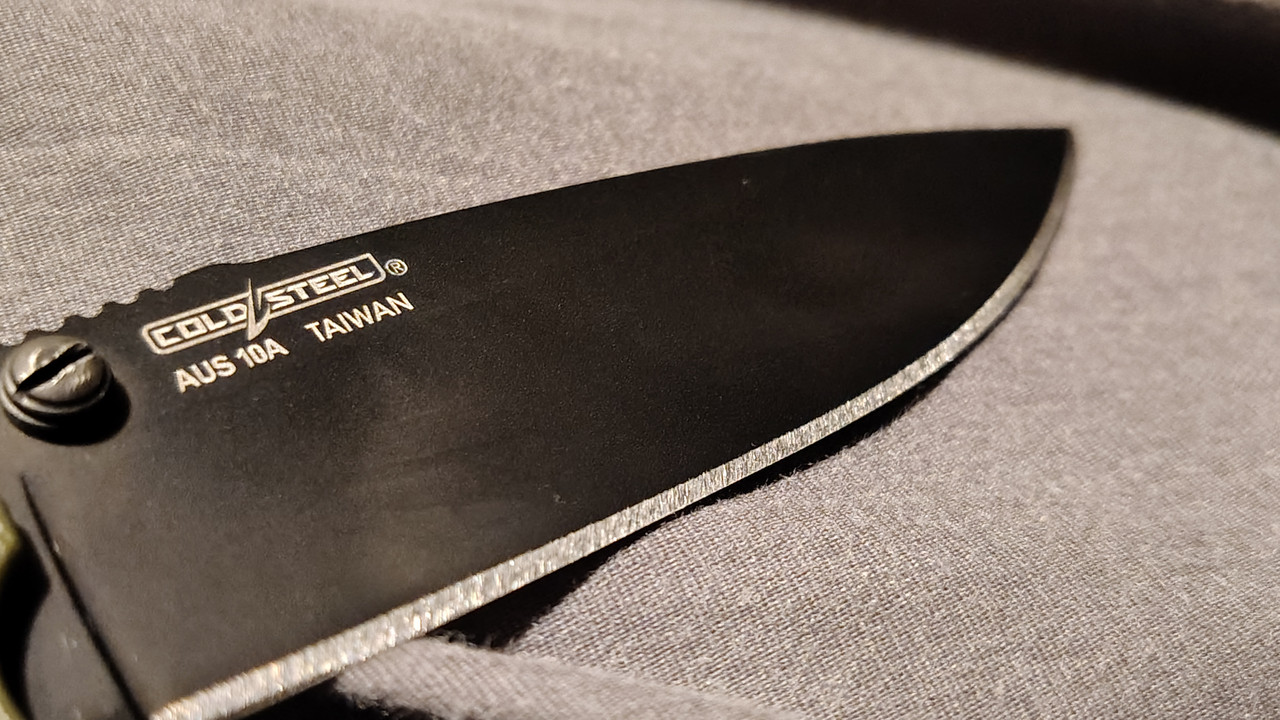
The Cold Steel Air Lite is the newest addition to my collection. I paid $40.27 + $6.83 shipping for a grand total of $47.10 to my mailbox from CKW.
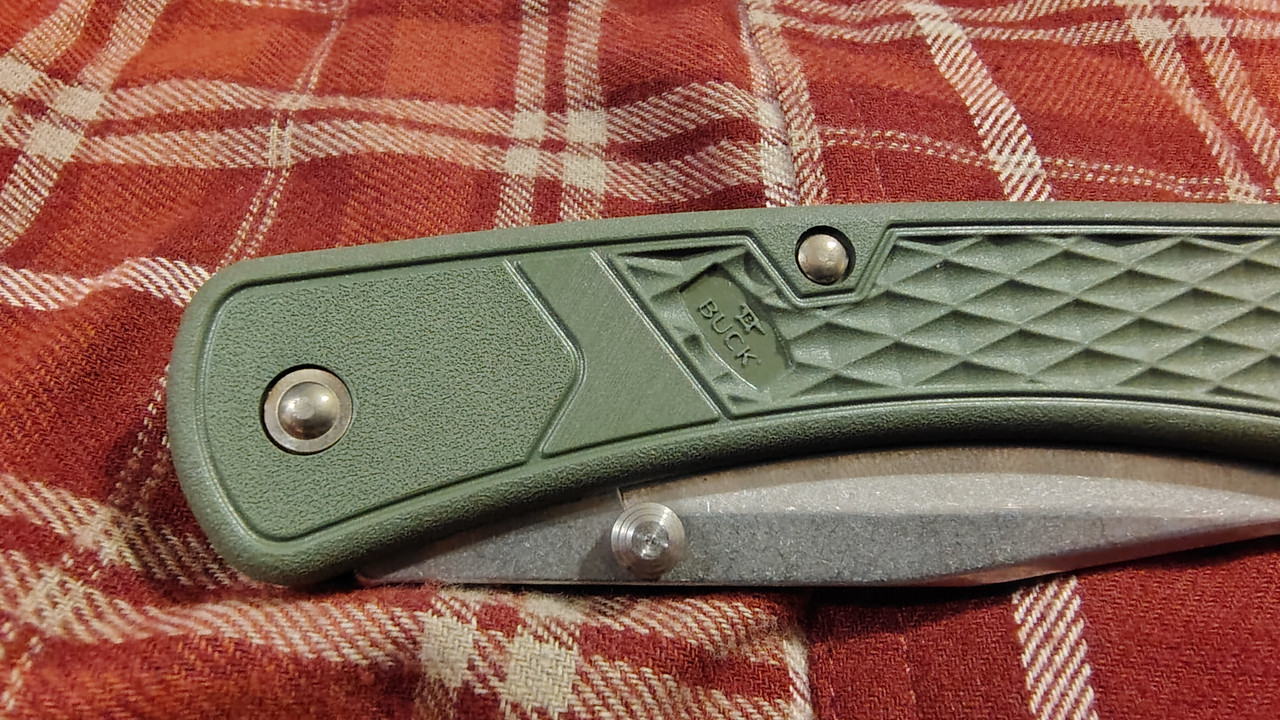
The knife is simple in construction. Two thin linerless G10 scales, a solid backspacer, AUS10 drop point blade, pocket clip drilled for left or right hand tip up, and the parts needed for the tri-ad lock.
The goal behind this purchase was to find a fully modernized lockback knife with one handed operation and a clip, that enabled the hand to get as close to possible to the cutting edge, with no index choil.
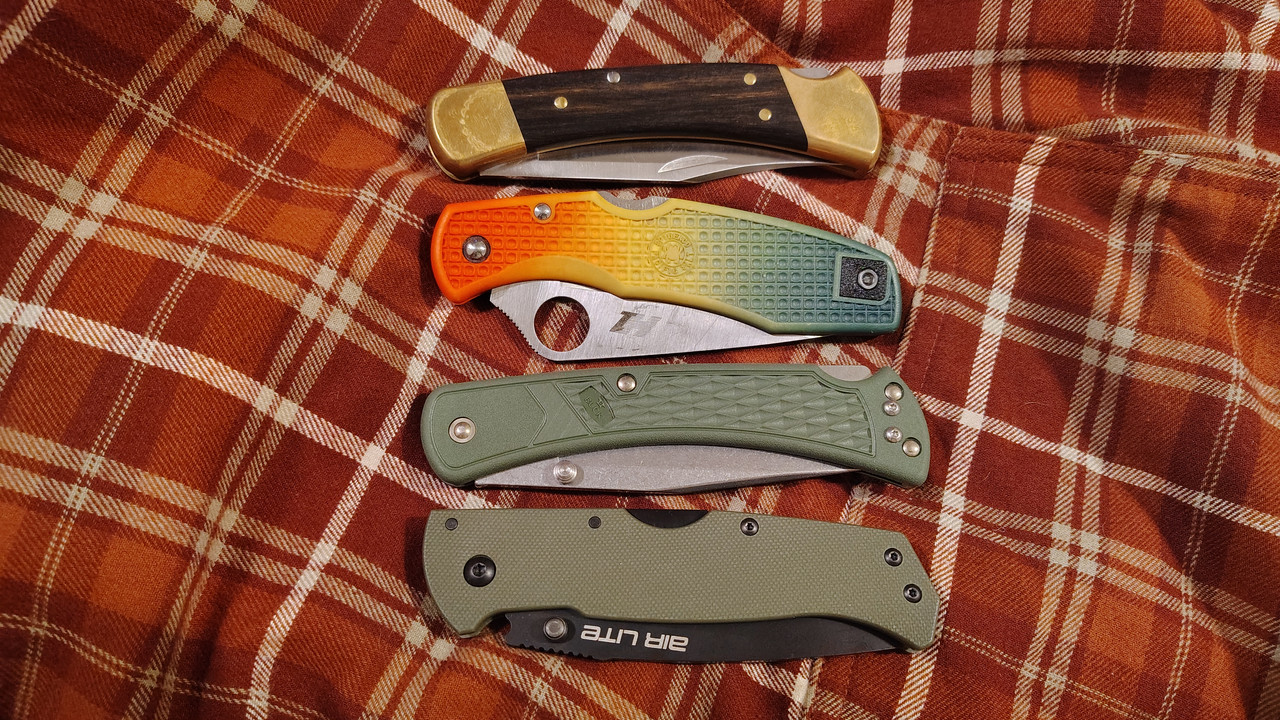
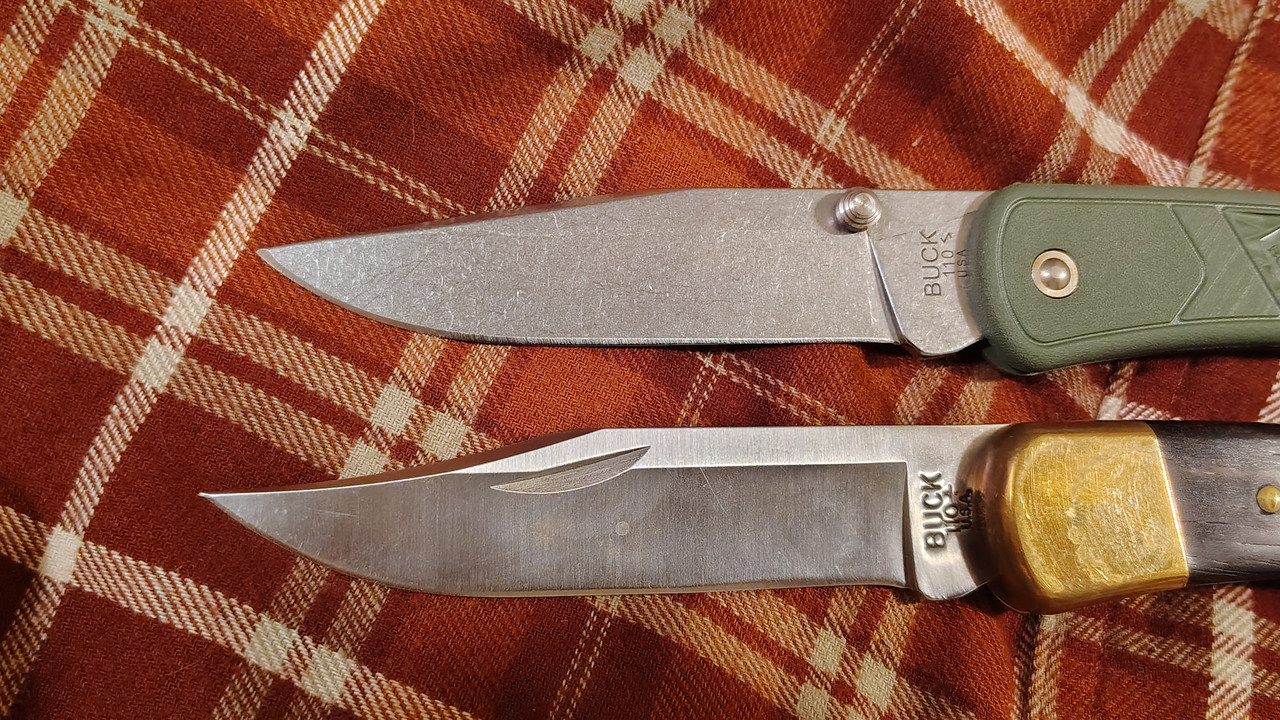
It really reminds me of the large mercator K55 knife, but modernized. They are extremely close to one another overall:
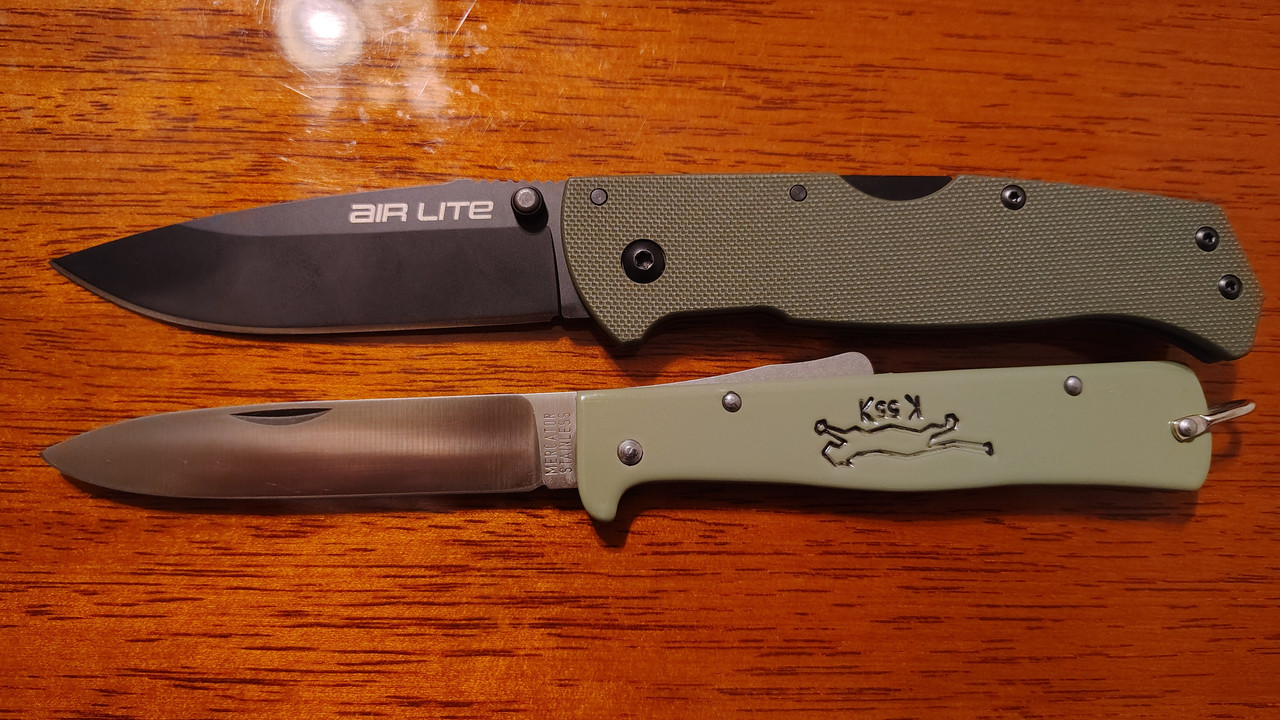
This knife is a departure from my usual EDC lockbacks in some ways as I'll discuss below, but it achieves the goal I had in mind better than any other design I found.
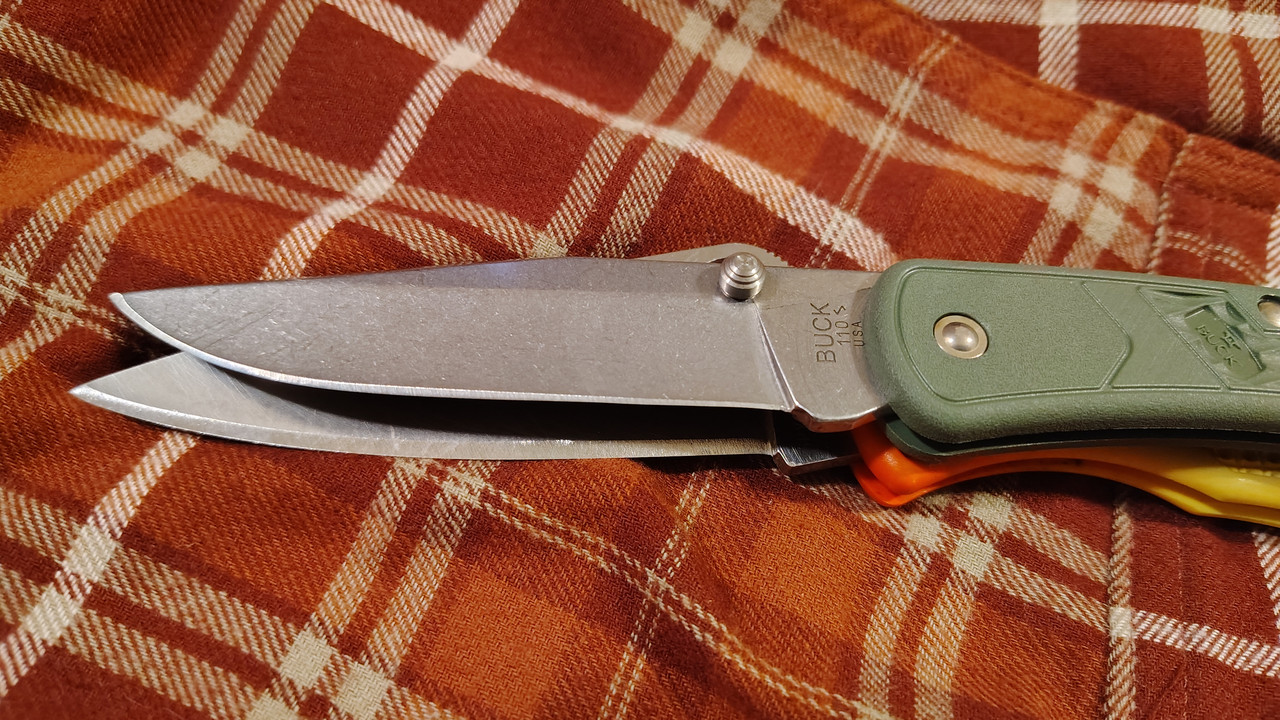
As you can see in the following comparison shots, the kick is much smaller than a Pacific Salt 1's kick:
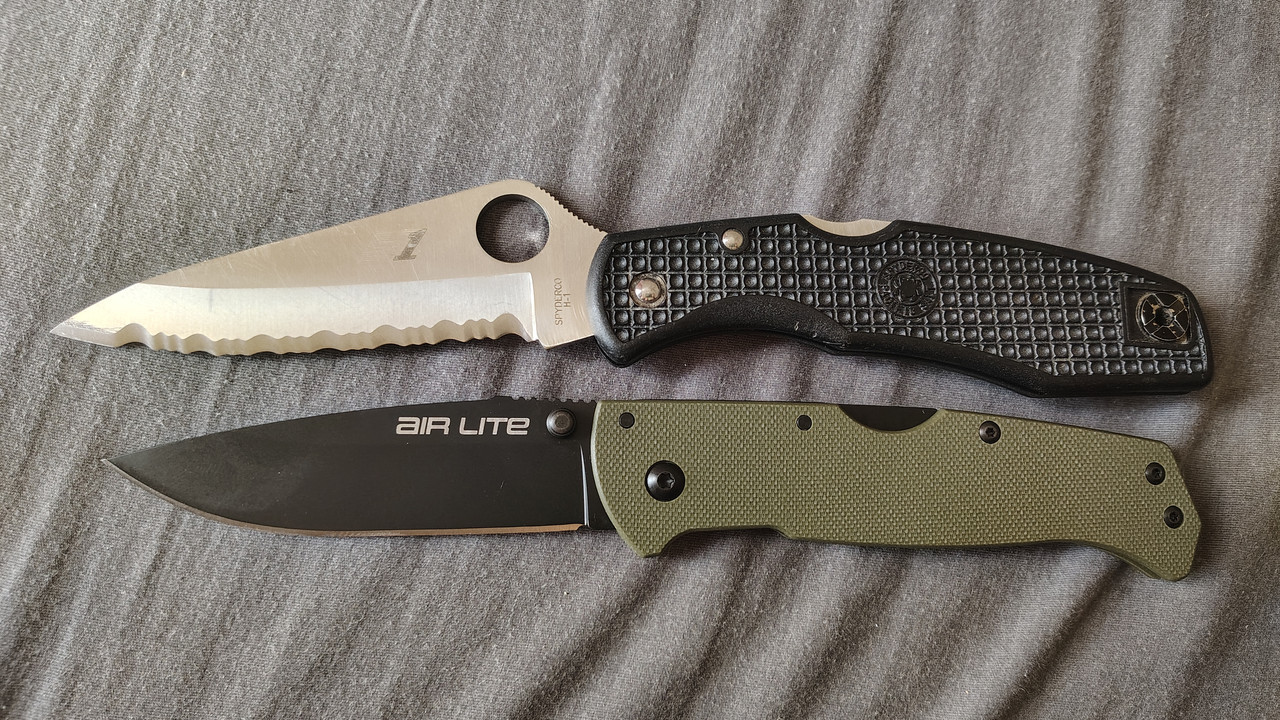
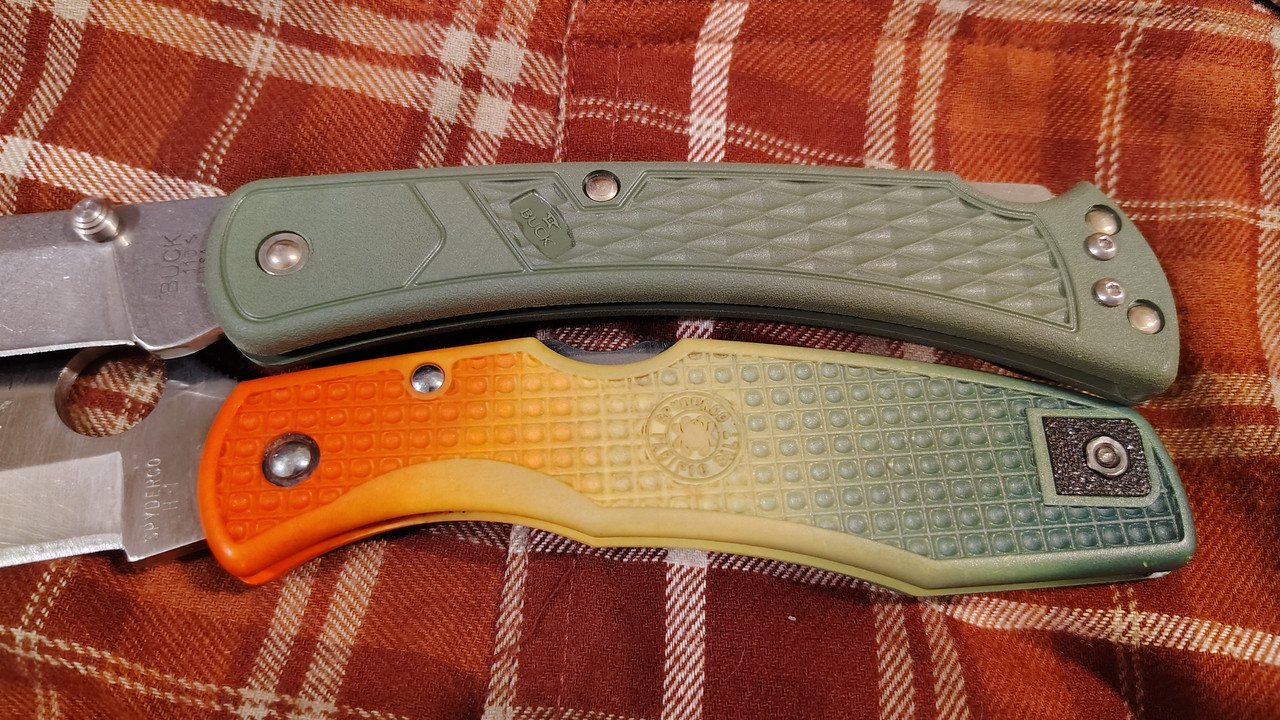
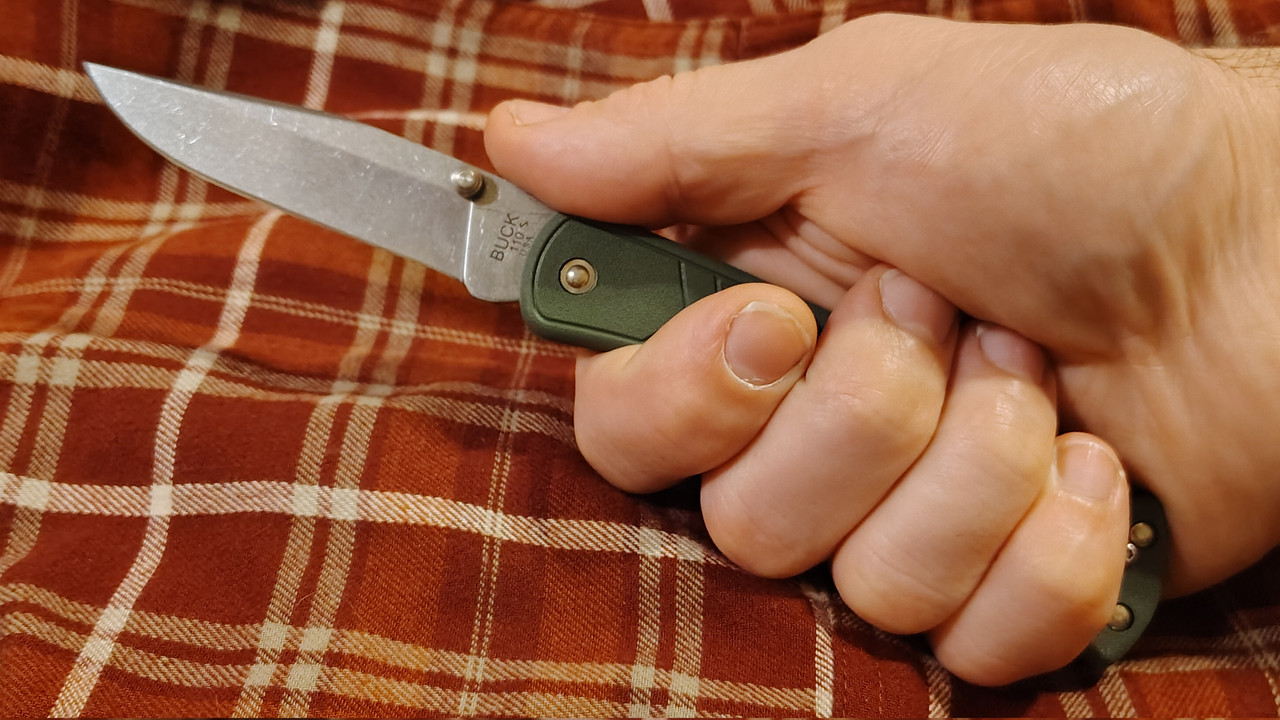
The handle design also gets my hand closer to the edge. That combined with the minimal kick lets the knife offer better leverage without using a choil:
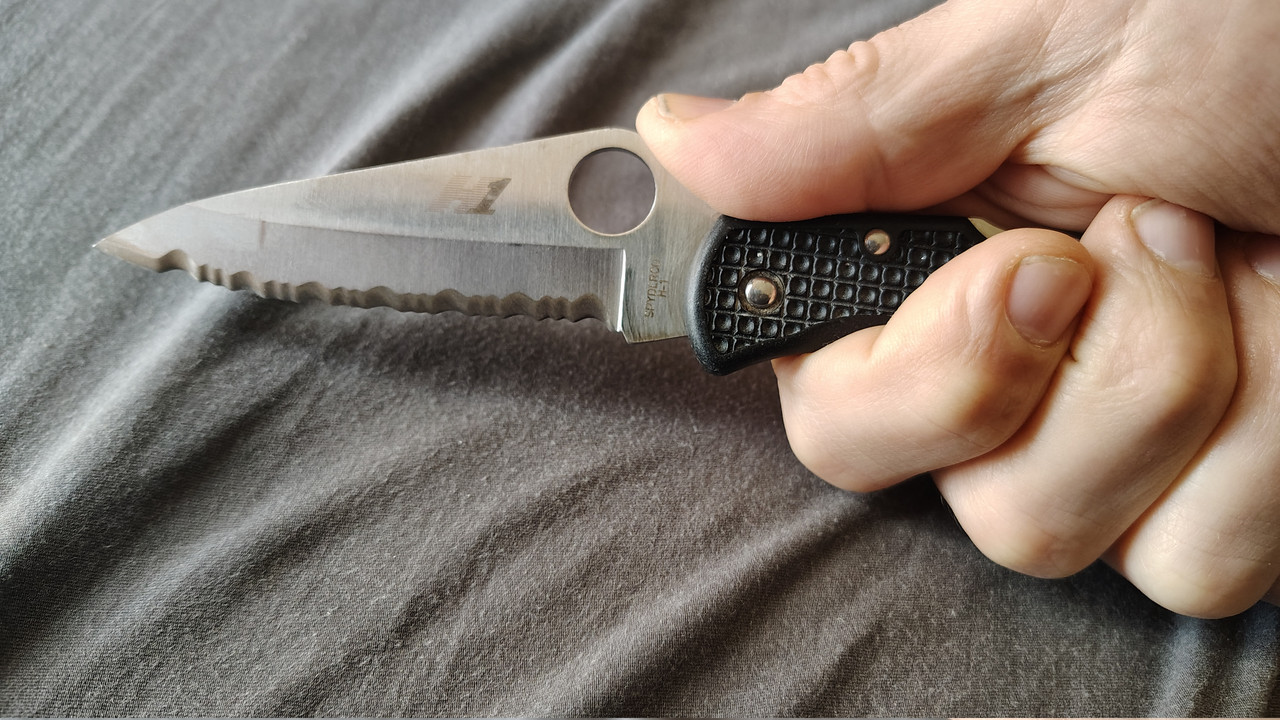
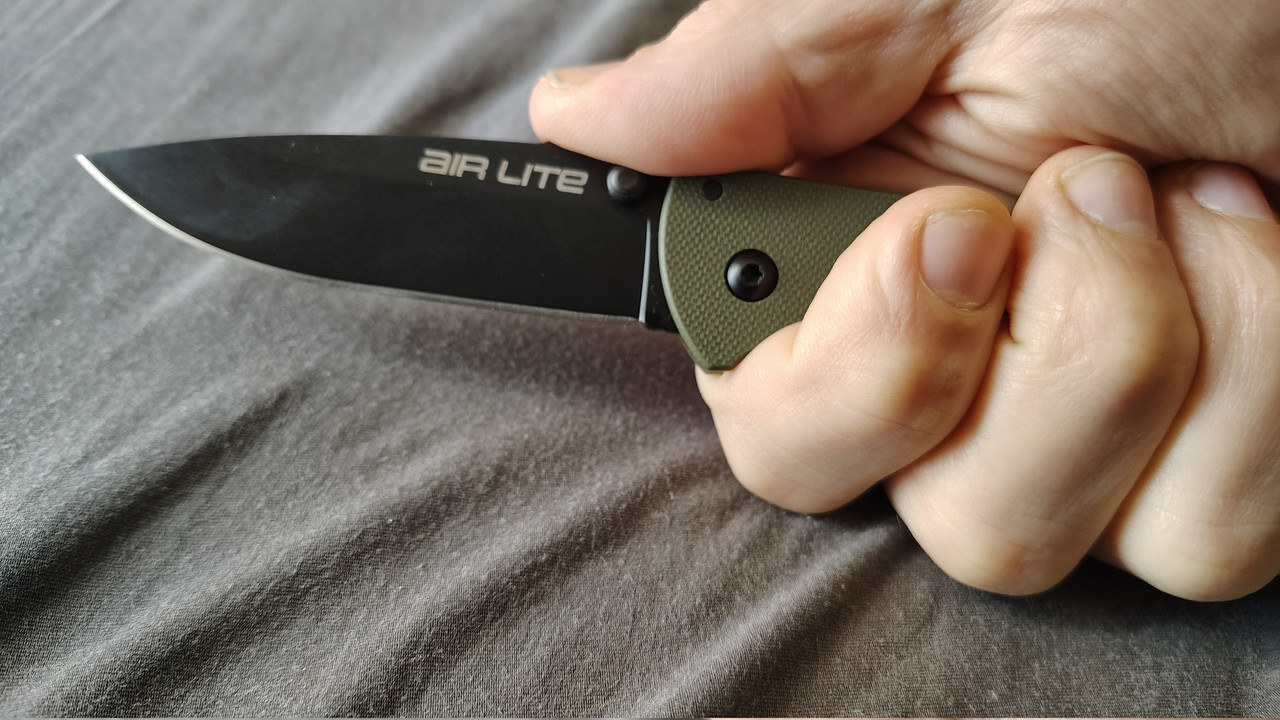
This is something I would really like to see in more Spyderco designs.
Index choils aren't as comfortable to use for me.
An issue they present is restricting my thumb from its natural position on most Spydercos, as they tend to have large humps on the spine to help fit in the opening hole.
So I would never carve wood or cut triple wall cardboard, or some other task where I'm pressing fairly hard on the blade with a Police with my finger in the index choil and my thumb on the thumb ramp.
Which forces me to choose between gaining better leverage or having a comfortable position for my thumb, but worse leverage.
A handle design like this eliminates that issue. That's why I want to see more of them from my favorite knife company. They work better for me.
In fact compare how close the edge is to my grip on the Air Lite and the Police 3, an all time favorite of mine:
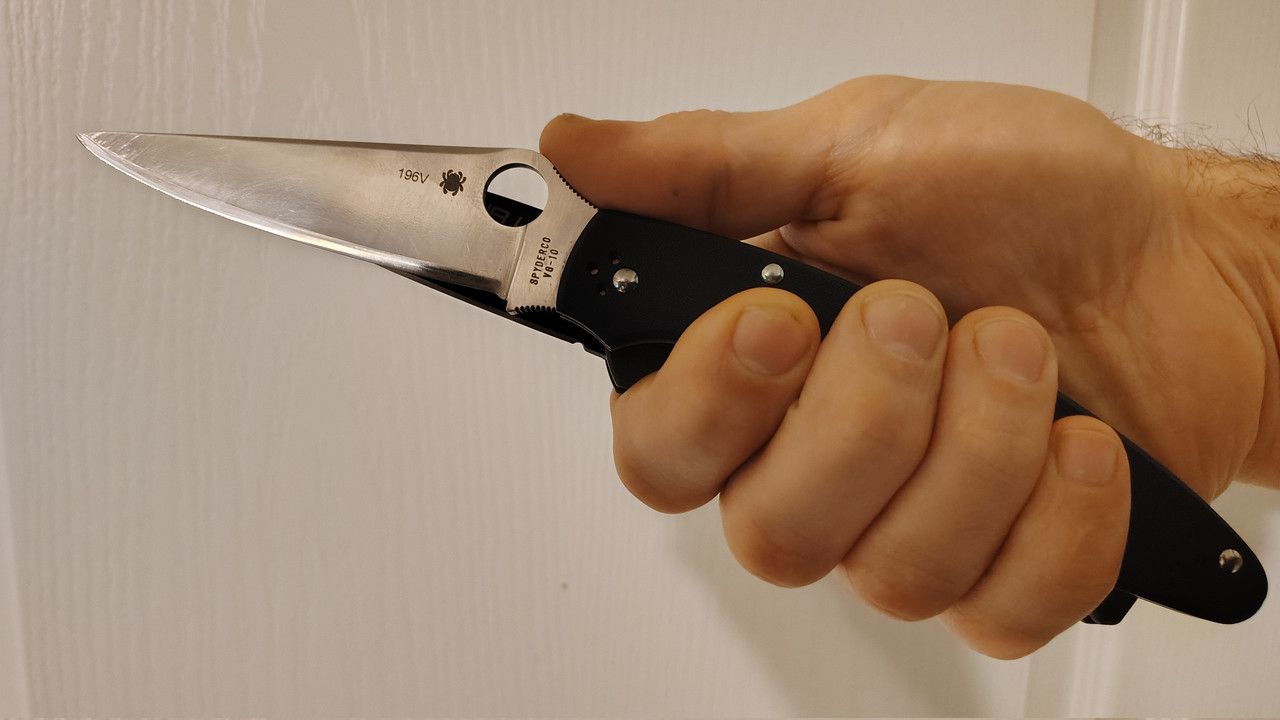
I've used the Air Lite for a bit now doing different tasks around the house like opening mail, cutting cardboard boxes, making feather sticks, slicing open blister packs, trimming threads, piercing plastic bags, poking holes in a plastic container to make a make shift funnel, scraping things, etc.
I have mostly positive things to say about it, but there are some negatives.
The action felt a little gritty during the first 1/4th of the opening arc. It smoothed out after some use and cleaning out the pivot, but right out of the box it wasn't as good as it usually is from Cold Steel.
The blade came functionally sharp, but only just scrape shaving. Not quite as sharp as I expect from Cold Steel, who's edges typically cleanly shave and sometimes tree top hair. It worked just fine for the utility tasks I've put the blade through though, and would impress most consumers with its sharpness.
I have not bothered to modify the edge at all, as I prefer to use factory edges until I dull them before reprofiling knives. This helps me get familiar with the overall geometry and decide how thin I'll want to take it. I'm going to aim for around 10dps with a 15dps microbevel on this one I think, as I have plenty of other folders for heavier duty tasks I've run a bit thicker.
The factory edge was a little uneven. Going with a casual eyeball estimate, the back side looks around 13-15 degrees, while the show side looks around 20-22 degrees per side.
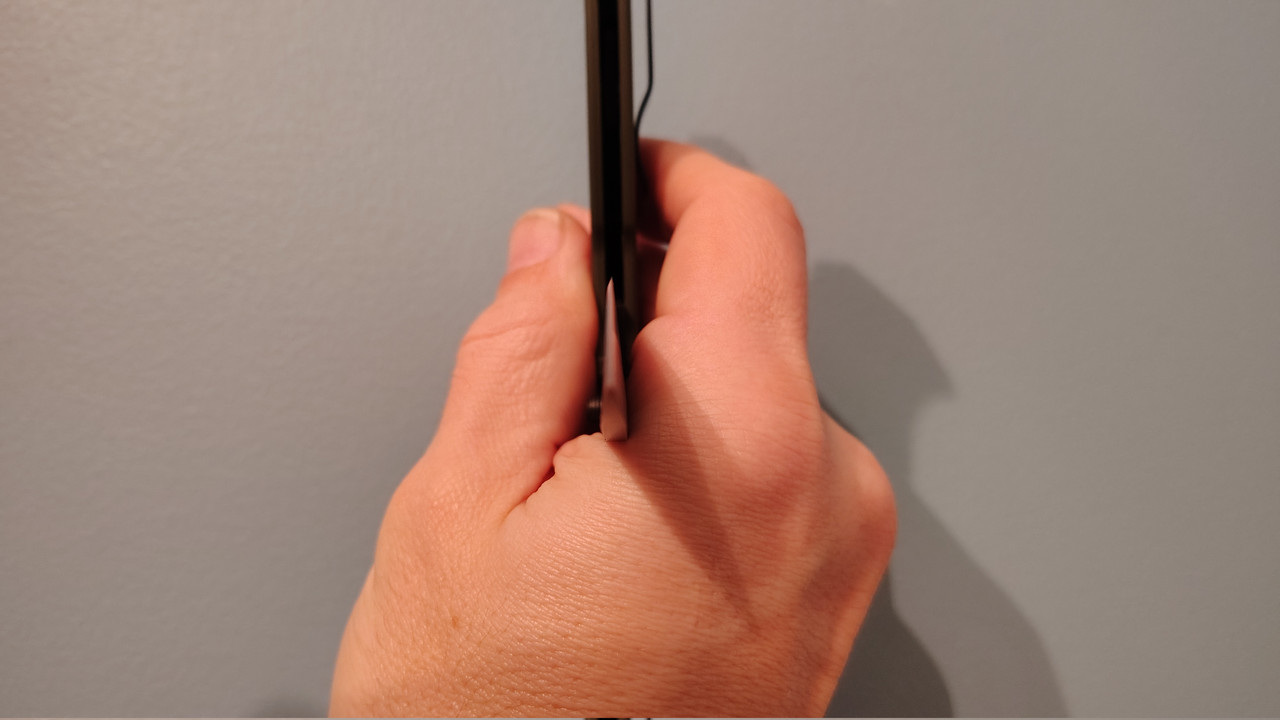
It cut just fine in most materials, besides wood.
When using a knife to carve wood I like the show side edge angle to be around 10-13 degrees. 15-20 degrees can still carve okay, but it requires me to angle the knife in a way that makes the task less comfortable. So the thick show side factory edge with the thin handle meant I'd much rather make feather sticks with a Voyager, 4 Max or Buck 110 than this knife right out of the box.
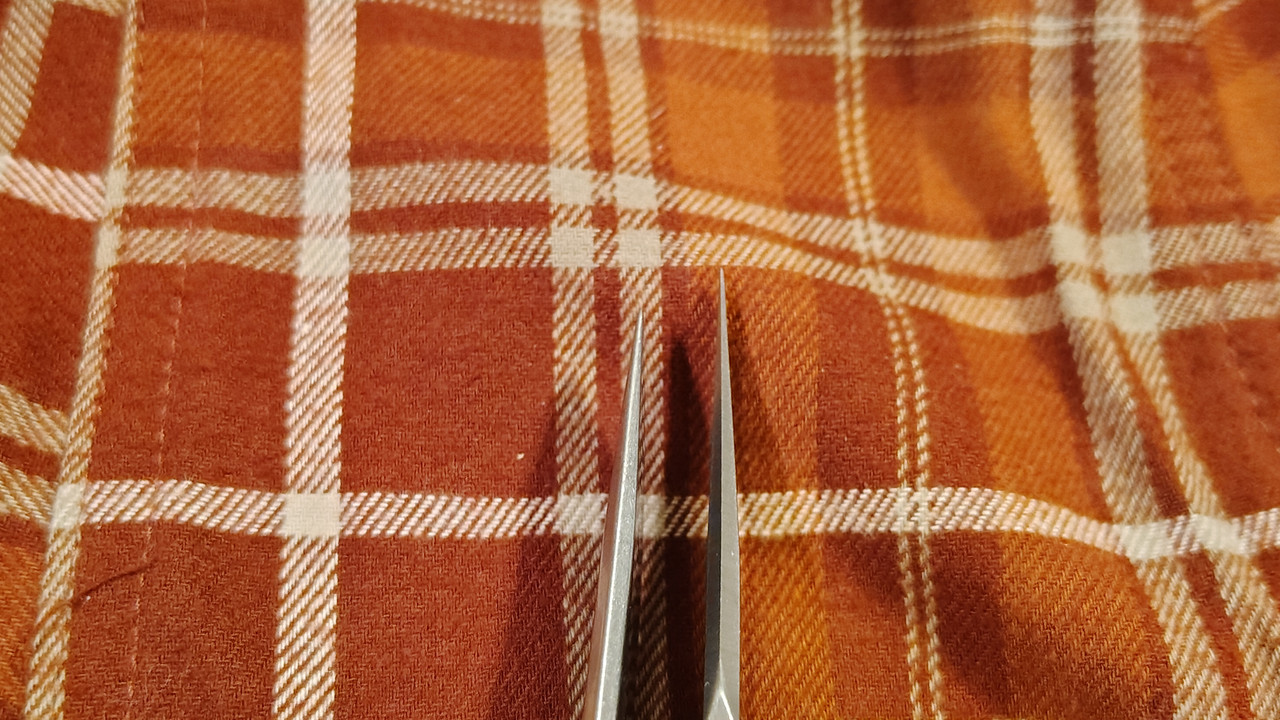
Of course, after reprofiling the edge will carve fine. The overall geometry is nice. It strikes a good balance between cutting ability and durability with its high saber ground and relatively stout tip. Here's a good look at both:
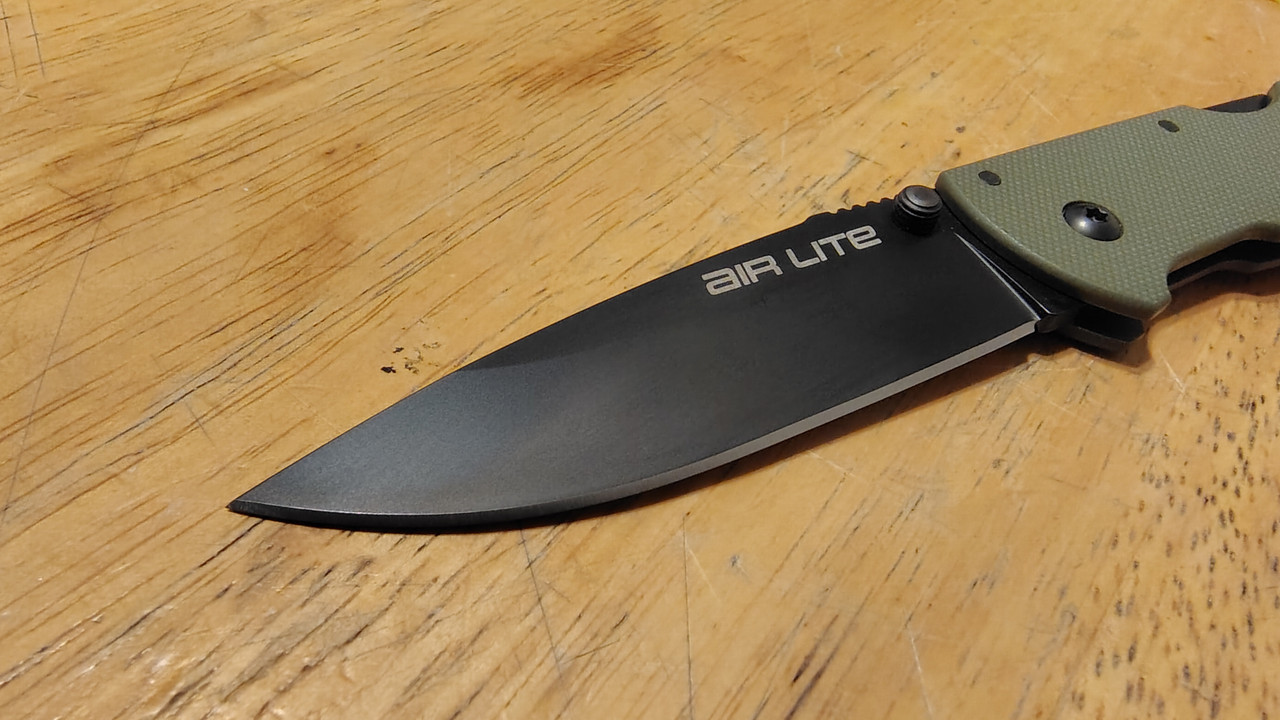
The flat saber grind. I believe Tanto versions sport a hollow grind, and I know their tips come a little thicker behind the edge.
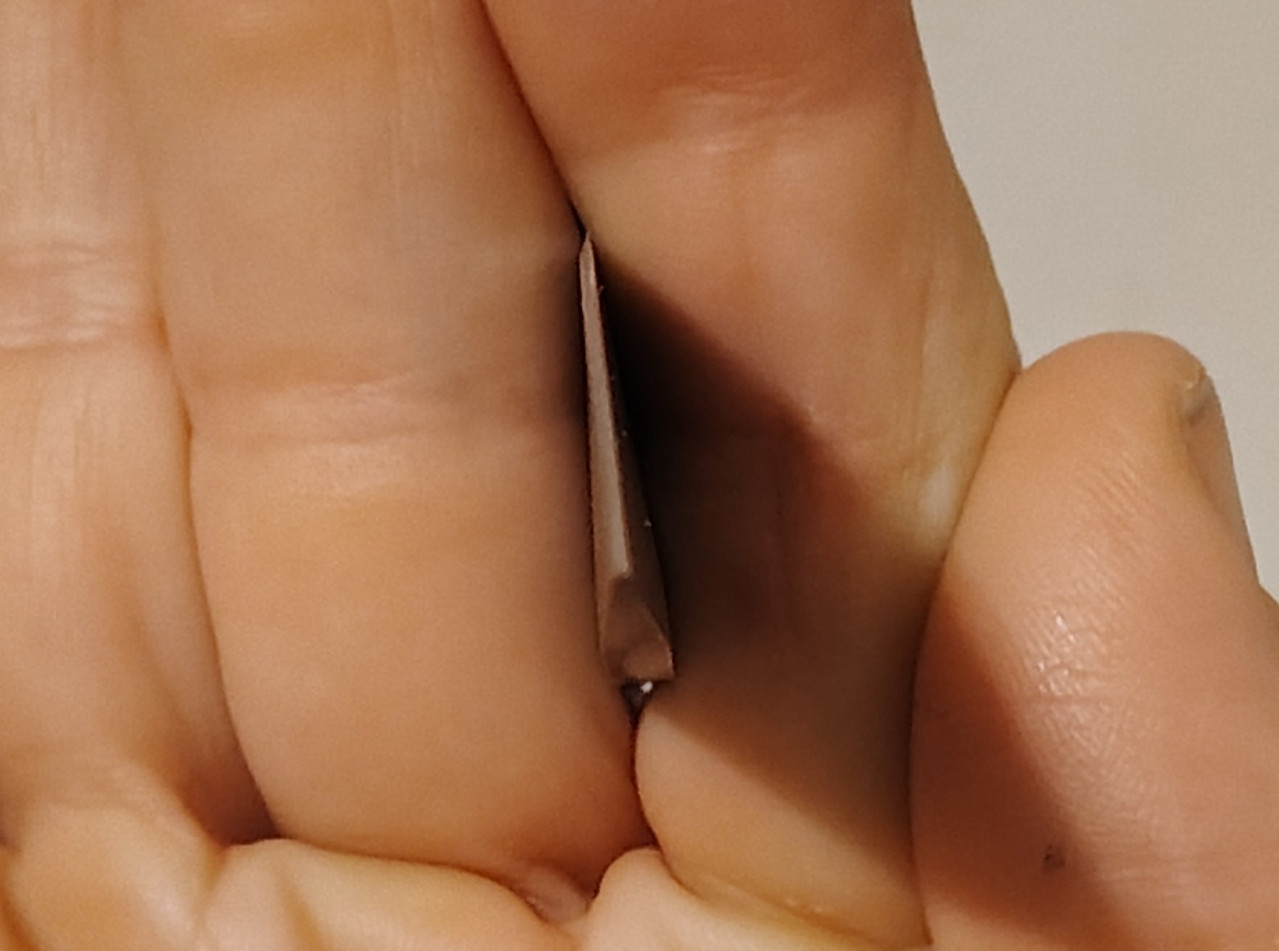
Once I thin out the edge bevel, the overall geometry will really shine. It's thinner behind the edge than my Recons, 4 Max's, Frenzies etc.
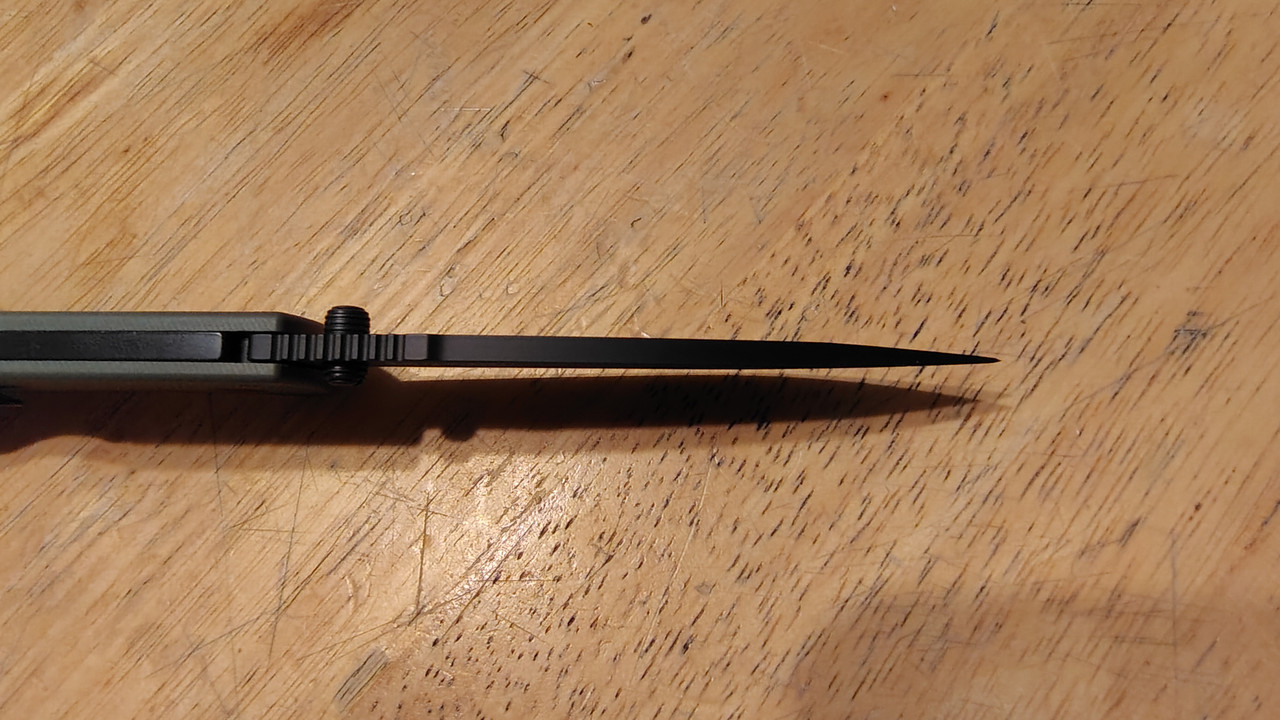
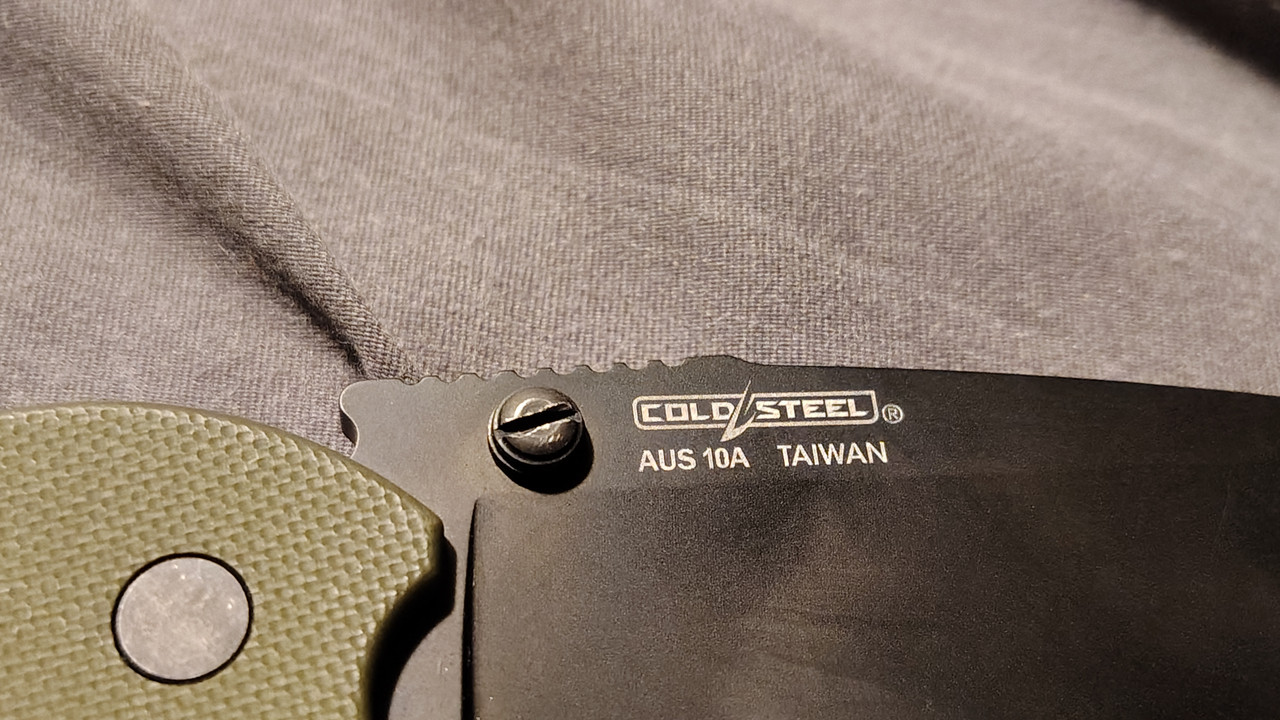
The blade steel is AUS10, which I'm a big fan of. Performance isn't far off from Spydercos VG10.
While edge holding monsters are the current hot trend, I find myself really enjoying a lot of 1990's and 2000's commonly used stainless steels. They're tough, corrosion resistant, sharpen incredibly easily, and tend to work well with thin edge angles.
I've used the steel extensively in multiple 4 max scouts and Voyager XL's. It has held up to heavy duty tasks like full arm swing chopping branches, and batoning 2-4" sections of wood with thinned out edges. It has shown zero edge rolling or chipping for me. Even with a ~13dps edge with 15dps microbevel the 4 max scout has no issue with this rough use.
I can't really stress enough how I use these folders harder than a lot of folks use fixed blades of this size and they've taken it in stride. I keep an AUS10 Tanto XL Voyager in my disc golf bag as a dedicated folding machete for helping extract friends errant throws from briars patches etc. All it does it chop through wood and thorns. No edge damage at all, ever.
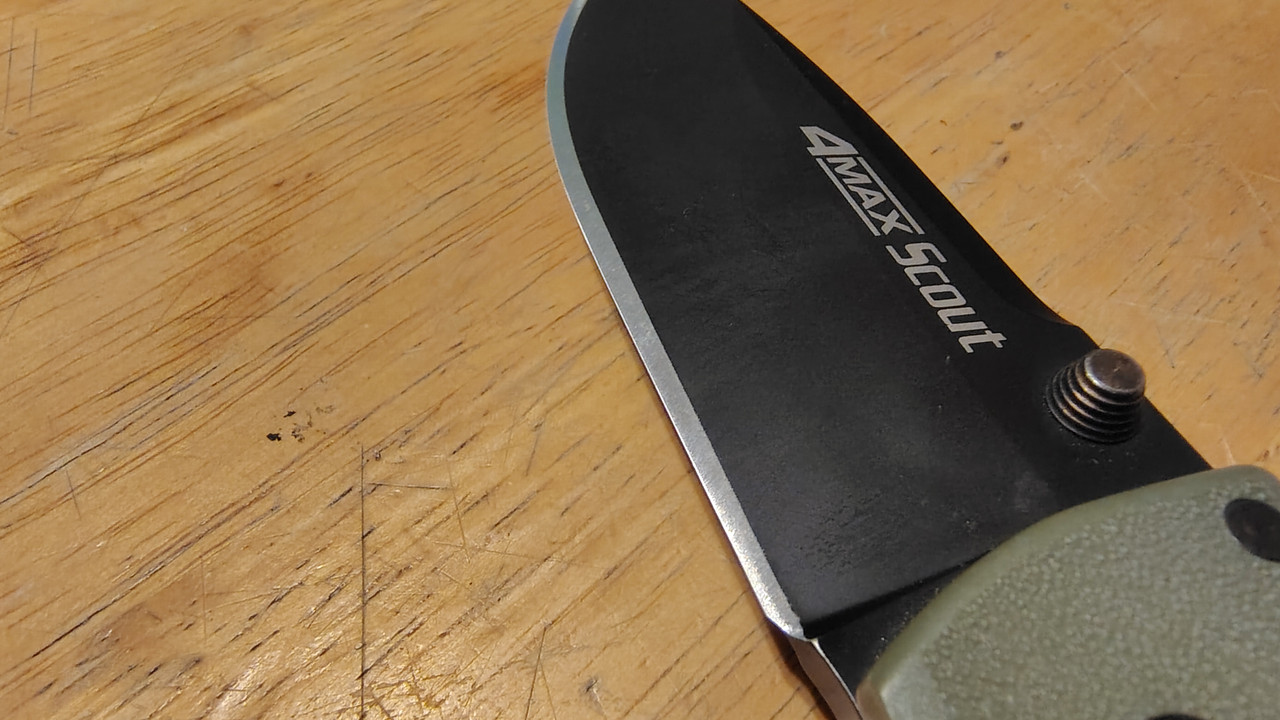
It takes a very crisp and sharp edge with extremely little effort. My 4 max consistently gets tree topping sharp with just a few strokes on a sharpmaker or ceramic bench stone. Not even sure the last time I sharpened it, and testing the edge it sends arm hairs flying with ease.
I know a lot of folks these days turn their nose up at stuff like Buck's 420hc, AUS8 and AUS10 Cold Steels, 154CM, and VG10 Spydercos, but I think these are some of the best steels for EDC's. They can take abuse even when running thin edges, they sharpen up so fast and easily, they're tough to rust and they hold an edge well enough for most day to day stuff.
So while I don't have a done of work with the Air Lite under my belt, I expect to really like the blade performance. I know the steel well, and it's ability to hold a thin edge angle coupled with the thinner than typical for cold steel geometry will make a heck of a slicer once I reprofile it. As it stands it cuts really well with the factory edge, and most people, even knife enthusiasts, would be well pleased with the out of box cutting performance.
While the Air Lite is thinner than I prefer for hard work, one advantage of the design is it fits easily in the dedicated knife pocket of the tru spec pants I like wearing.
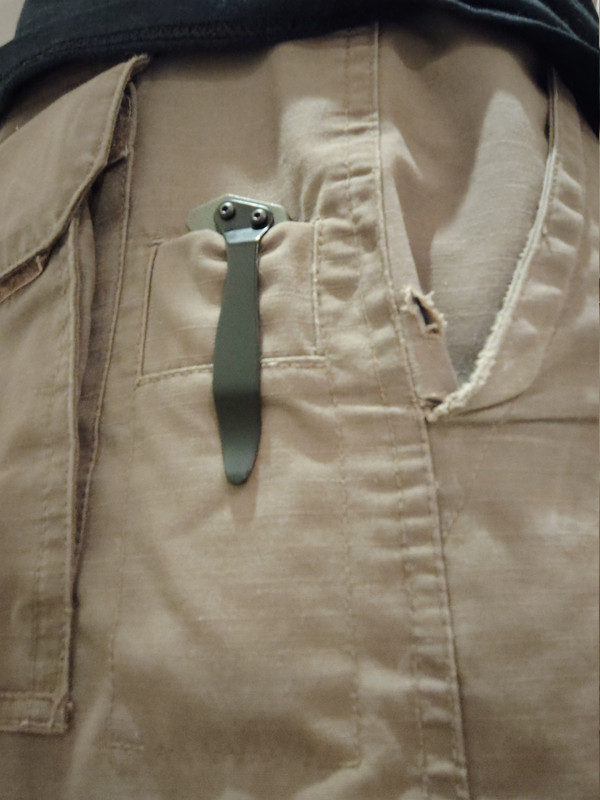
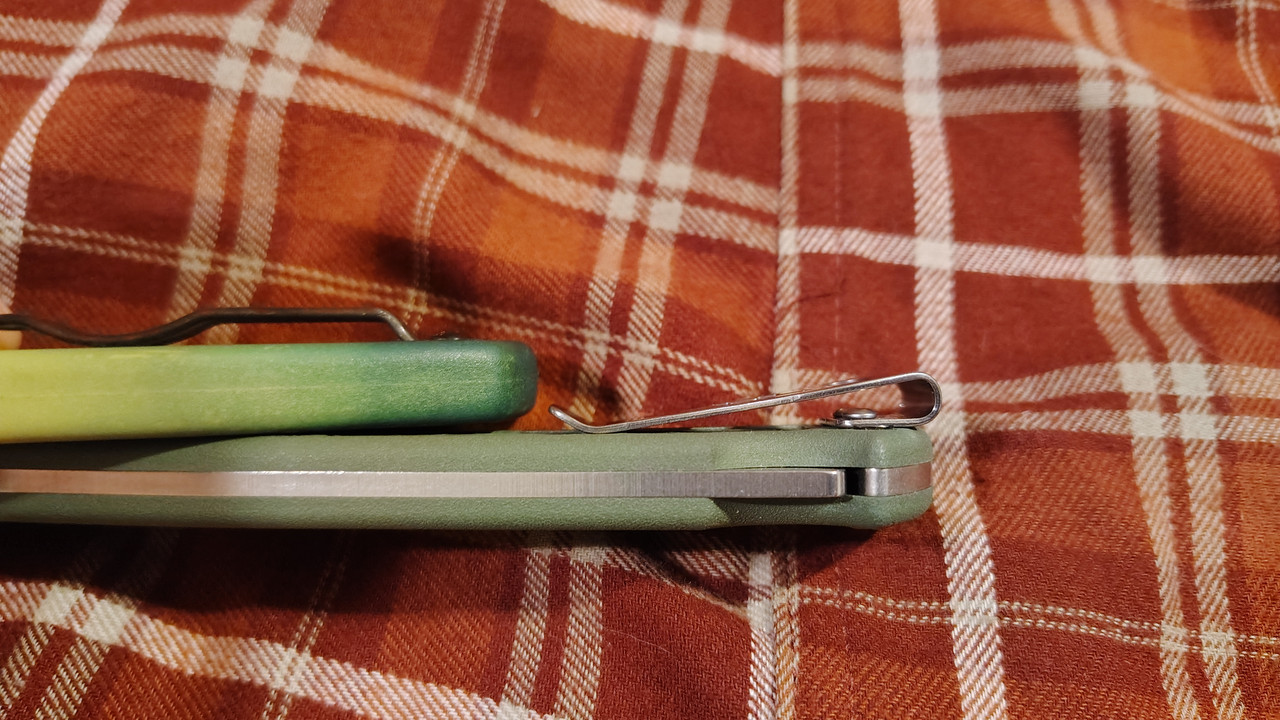
This photo also shows the clip carries pretty deep. Any deeper and I'd complain about it, as I like about 1/2 to 3/4" sticking out above the clip. Most people will enjoy that aspect of the design though.
Most Spydercos and a lot of Cold Steel knives won't fit there due to their closed width.
That is one reason I toyed with the idea of the American Lawman as a work carry, because it does.
While the Lawman is a nice knife, I hate the generous index choil, as it shortens the cutting edge way below my preferred length and provides no advantages to make the trade off worth it. I don't need any extra control on such a small knife, and the regular grip locks my hand in place perfectly fine.
Here's the Lawman and Air Lite compared:
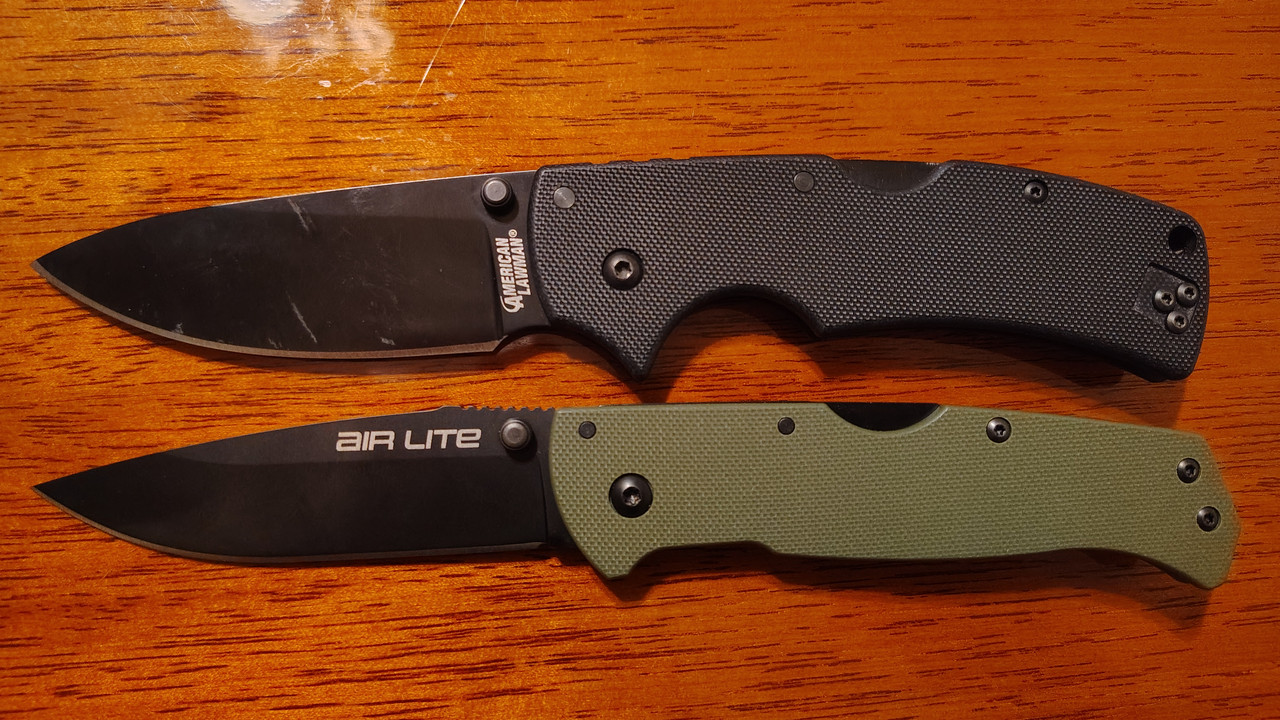
You can see the Air Lite offers much more edge with a nearly identical handle size. Another point in favor of dropping choils.
I cannot overstate how much I have grown to prefer knives designed like the Air Lite vs the Lawman in this respect. I gain a half inch of edge in the part that offers the best leverage, and the handle feels roomier in the grip I actually use.
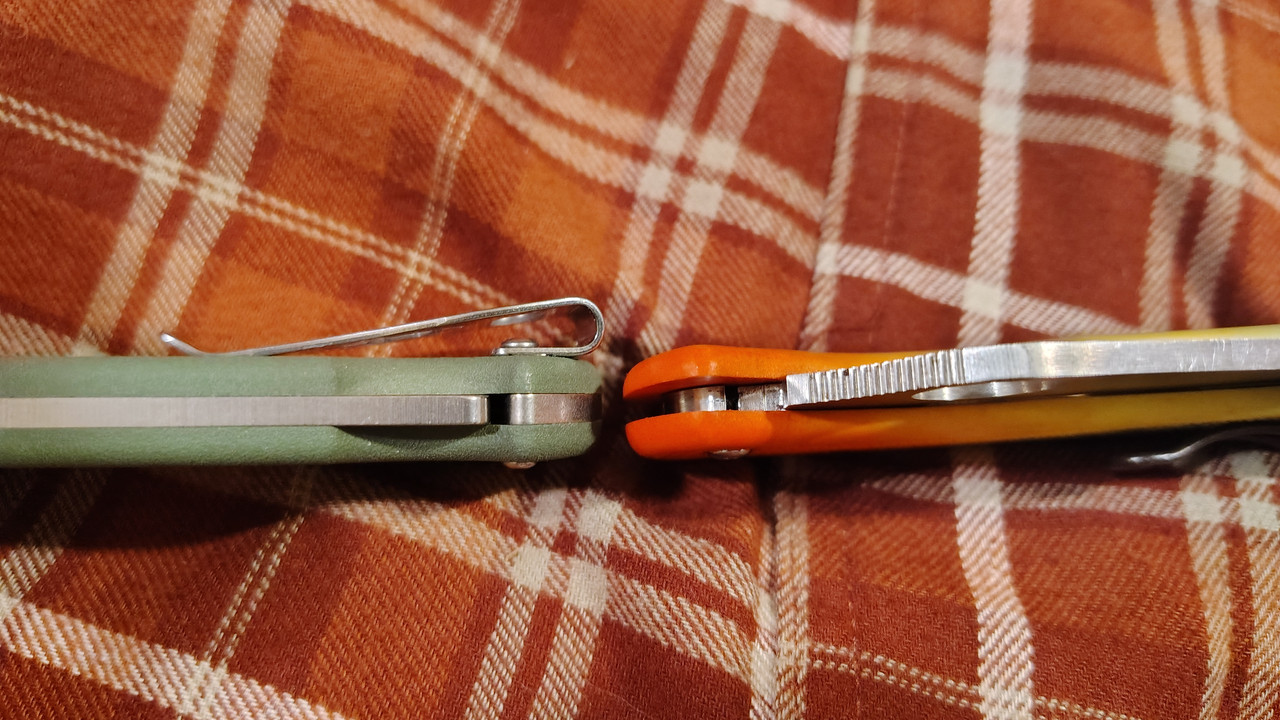
One thing that stands out to me about this knife is the pocket clip is pretty long compared to the handle:
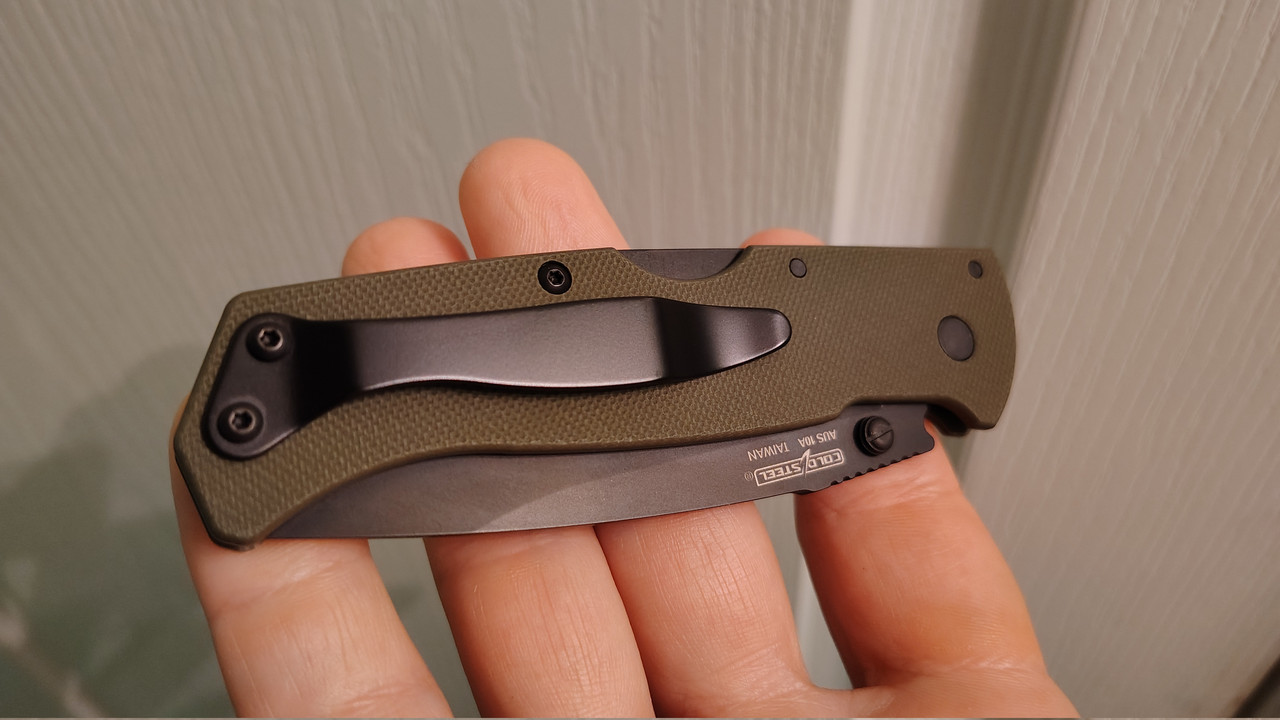
Not an issue for me, but it stood out as unusual to me.
Also, the clip works great right out of the box. Cold Steel is notorious for users often needing to tweak the clips to get them working ideally.
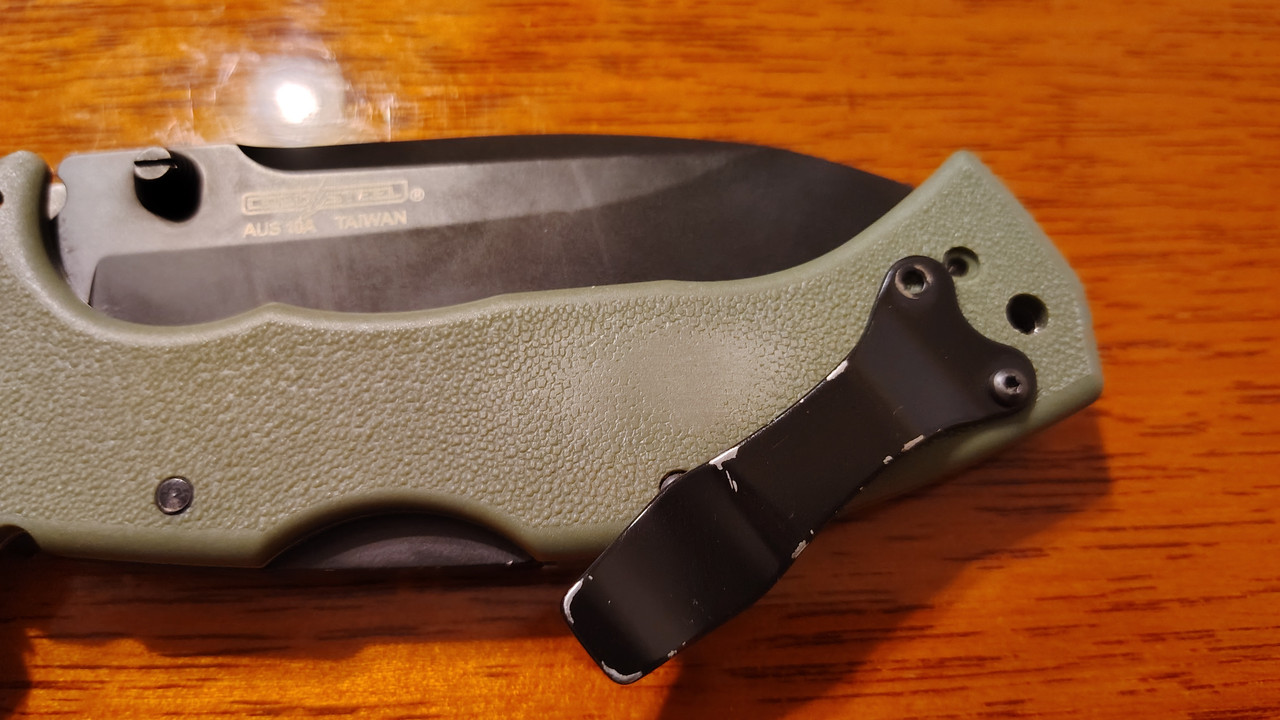
For example, on my 4 Max Scout and Voyager XL I had to loosen the clip tension slightly and sand under the clip on the handle scale to get them working exactly as I wanted. Here's my go to 4 Max Scout:
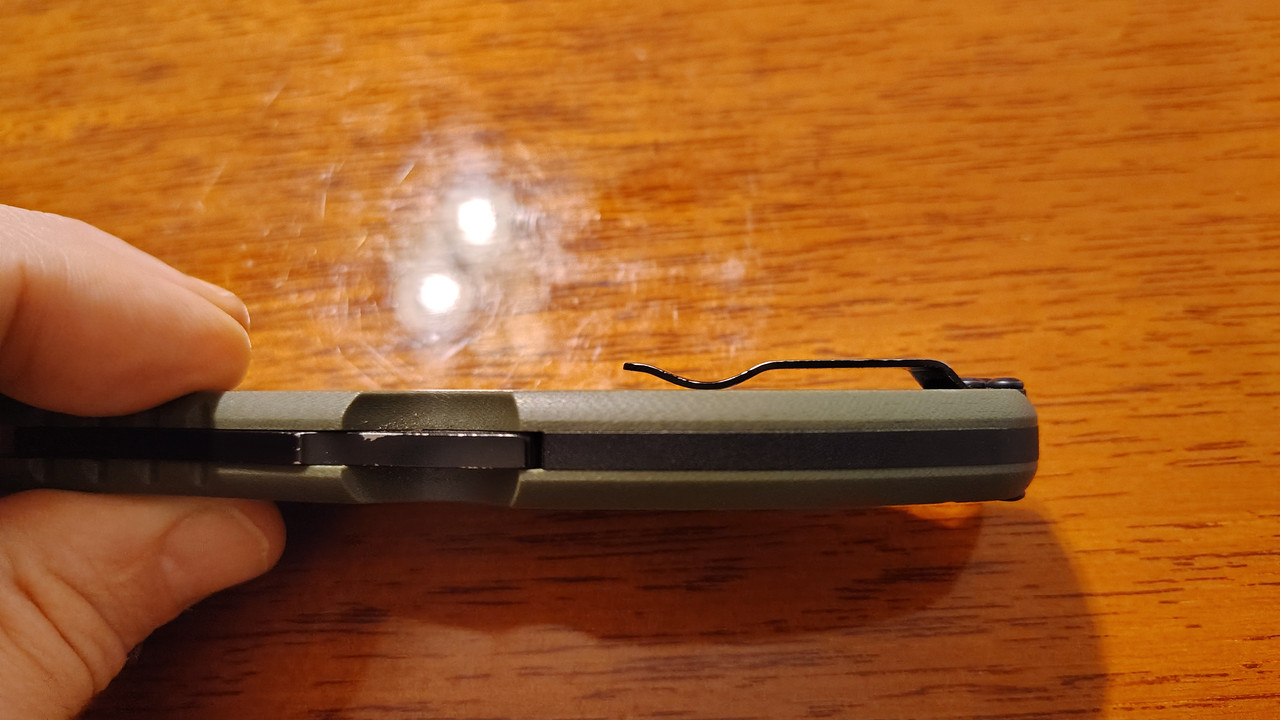
On my Recon folders I don't have to sand them but I do have to take the clips off and bend the end upwards more to give them more clearance to slide on to a pocket. Here's my most used Recon:
To their credit I prefer clips too tight than too loose. It's an easier fix in my experience.
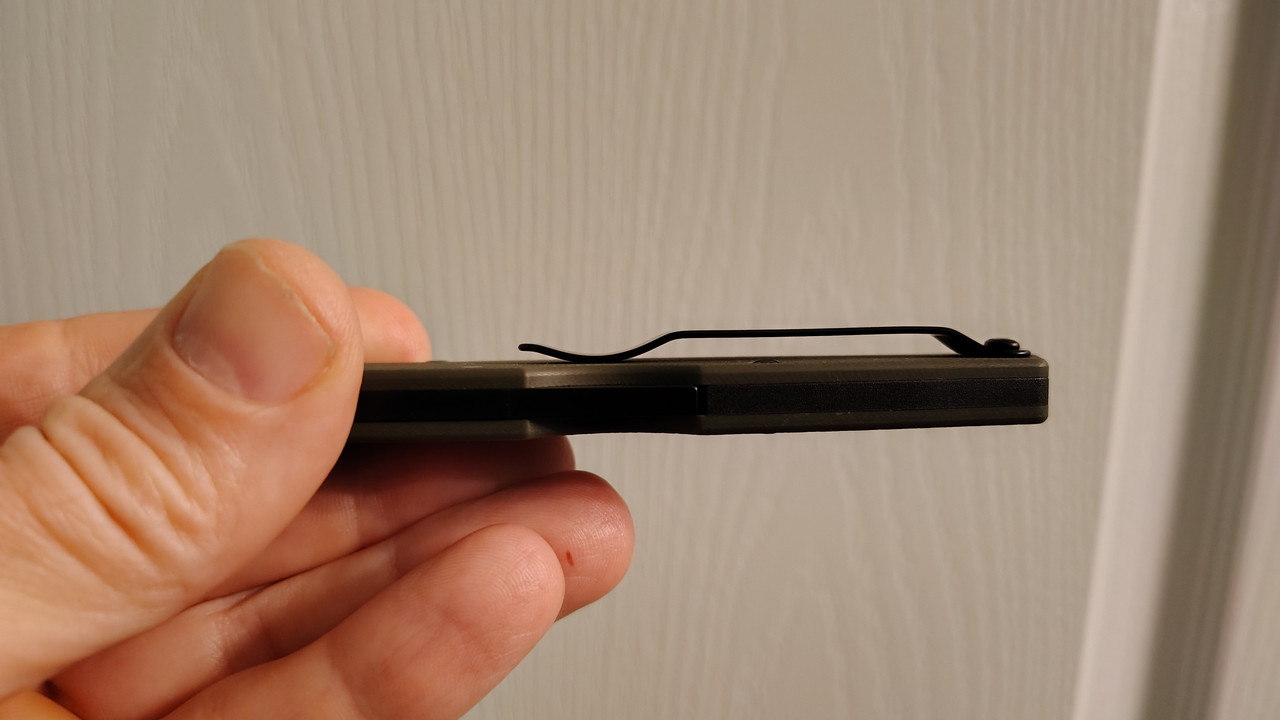
This one needs no sanding on the scales, no bending the clip with pliers, and no adjusting the tension. It works well. I may adjust the very end slightly at some point, because it may be set a bit low for IWB carry in running shorts, but I'll cross that bridge when I get there.
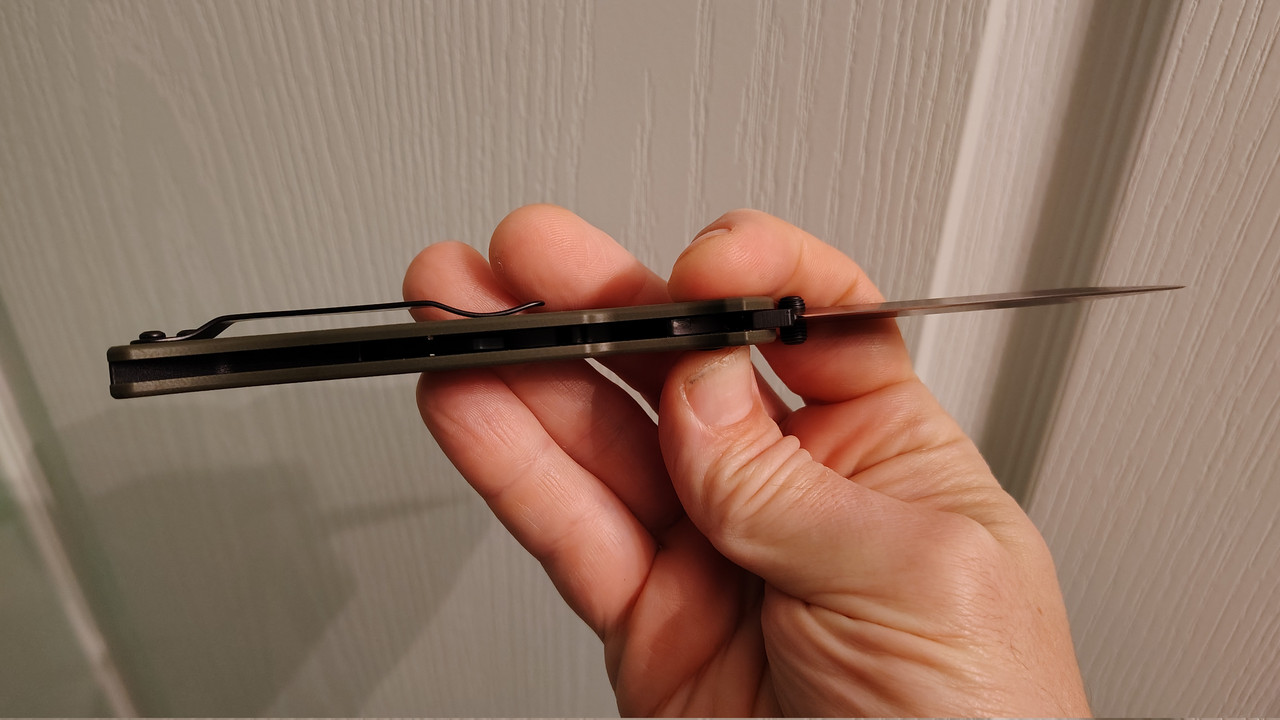
The knife is very slim overall. Too slim for a hard use knife, though it definitely seems capable of any folding knife task. If I knew I'd be doing a lot of heavy cutting, I would certainly choose a Recon, Voyager or 4 Max over it for their thick, ergonomic handles.
That's the main issue I have when it comes to ergonomics. It's just too thin for harder work. Great in the pocket, but too slim for my preferences during use.
Otherwise it's fine ergonomically. Not great, not bad, but fine. There's no hot spots, nothing offensive about the handle. It's comfortable in a variety of grips. It just doesn't immediately wow me like the 4 Max and Recon folders did the first time I held them.
I do want to praise how close it gets my hand to the edge. That makes a big difference in cutting comfort, because tasks can be completed while applying less effort to the handle.
I also like the lack of a thumb ramp.
It's nice ergonomically, it's just that I own at least 3 Spydercos, 3 Cold Steels and various Buck 110's that are clearly more comfortable for my grip.
However a knife this slim and light can make a good general purpose EDC, as it's very unobtrusive when carried, and robust enough for any typical day to day task. It's a good jack of all trades style pattern, and one can always keep a beefy folder or fixed blade in their pack or glove box for use as needed.
Personally I don't mind carrying something a little more robust like a Recon folder day to day, but I think a lot of folks here that primarily carry Endelas, Delicas, Natives etc. would appreciate this design a lot more than a 4 Max or Frenzy.
This is a very simple, no frills design but it does just about everything right. Thin, light, unobtrusive, good blade length, not too small not too big, not expensive but not poorly made.
In fact I think this could be the gateway knife for a lot of people that haven't gotten into Cold Steel.
They're primarily known for their overbuilt, hard use knives, but as they've shown with the Air Lite, American Lawman and Tuff Lite lines, they can make a good compact every day carry.
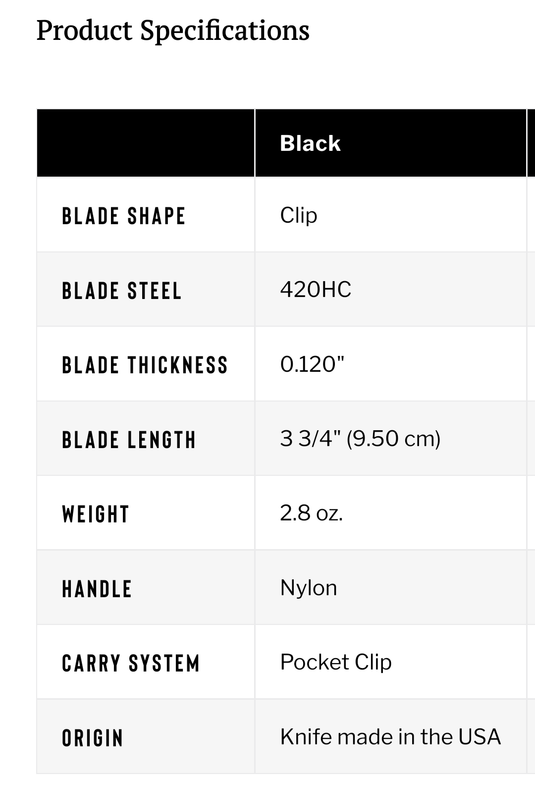
Plus with a street price of $40-65 depending on where you shop and which version you buy, you're not going to see much competition out there for modern folders that isn't made in china.
The knife is a very good value. I'm not sure if its higher tolerances,lower sales volume, better QC or what that creates such a difference in street prices between taiwan made Cold Steels and Spydercos, but it's something I wonder about.
I know I'm not alone when I say I'd throw cash at Sal without a second thought if Spyderco released a well designed G10 & VG10 lockback made in Taiwan with a street price under $100, much less $50. *shrug*
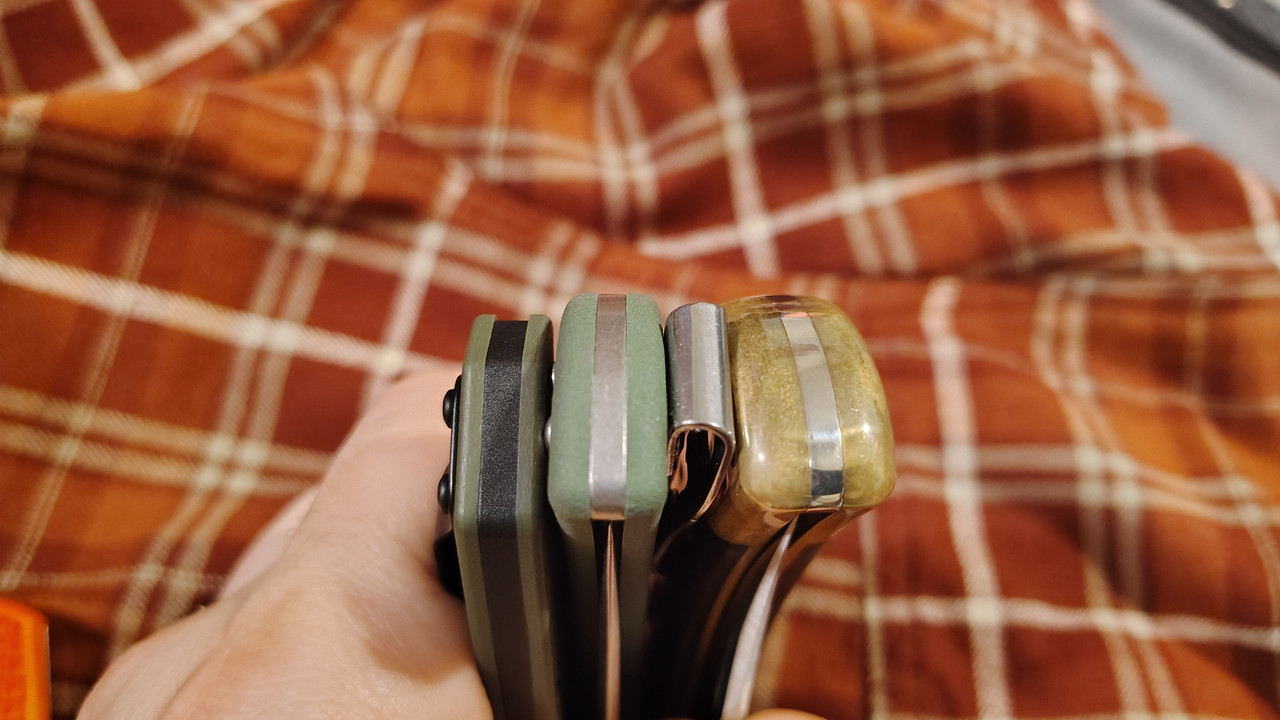
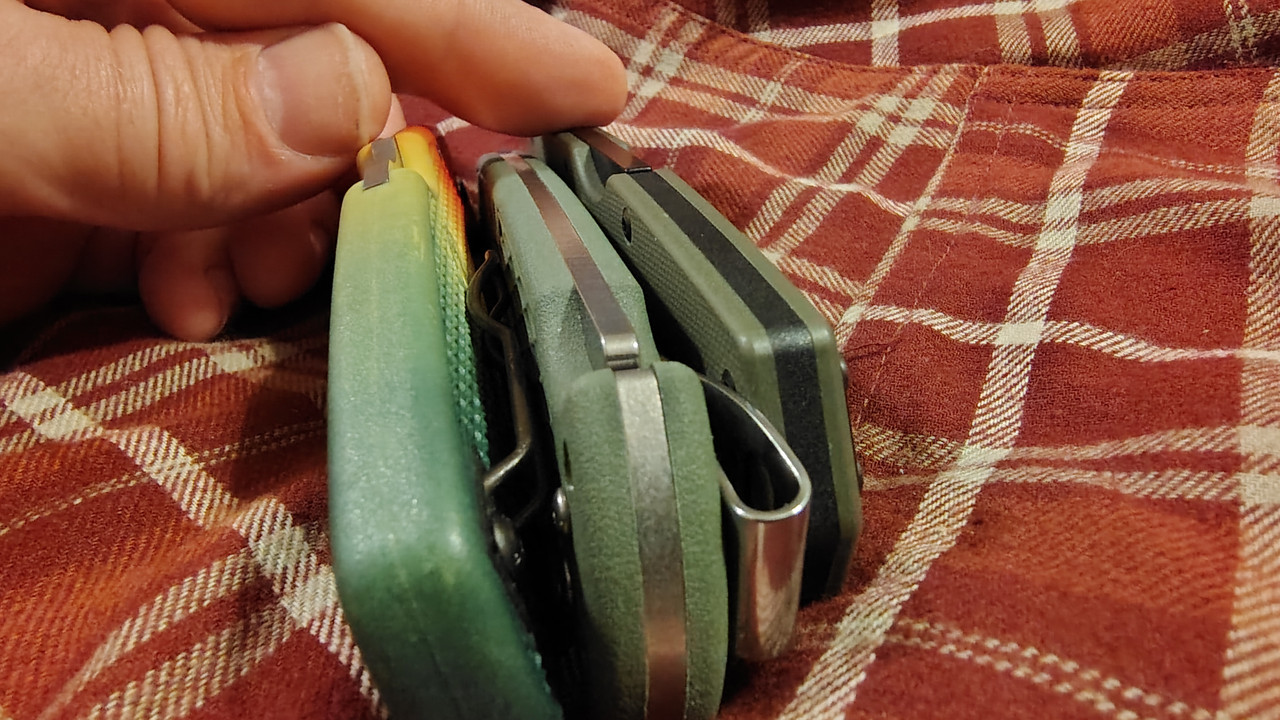
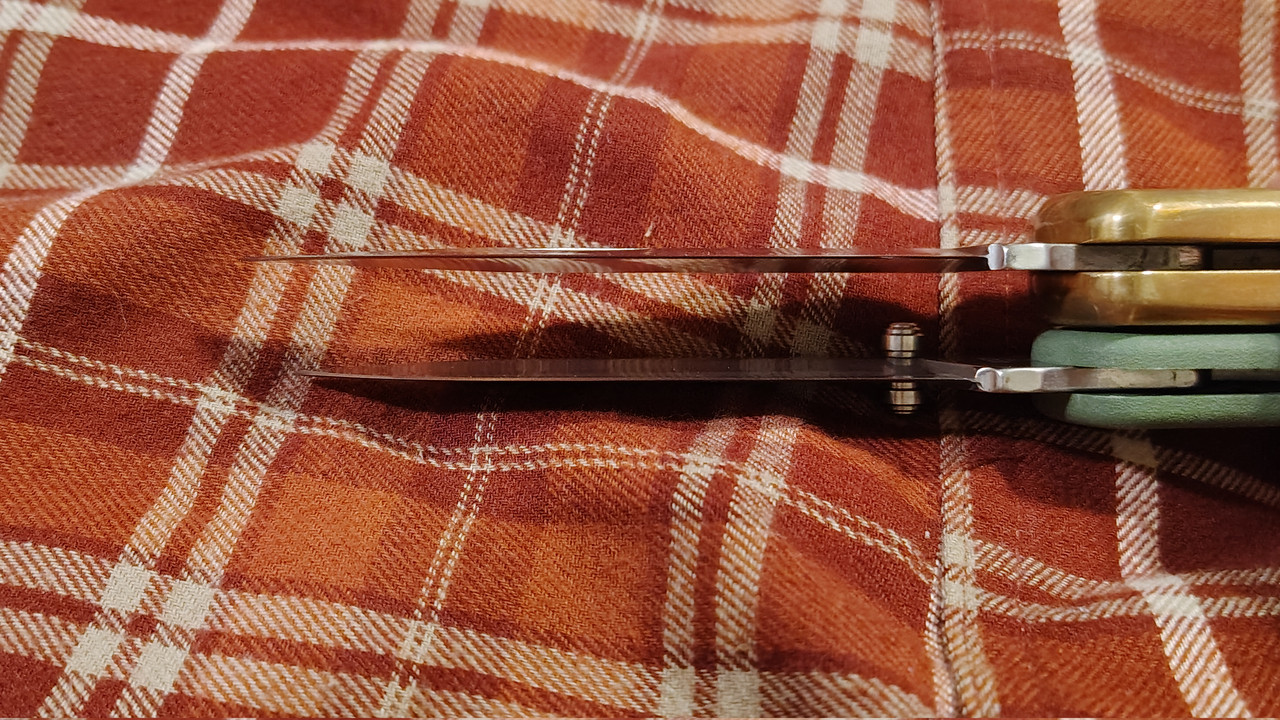
Before I end the review, some comparisons are in order. Here is the Air Lite vs a lot of other folders, comparing their thickness.
Air Lite vs 4 Max and Recon
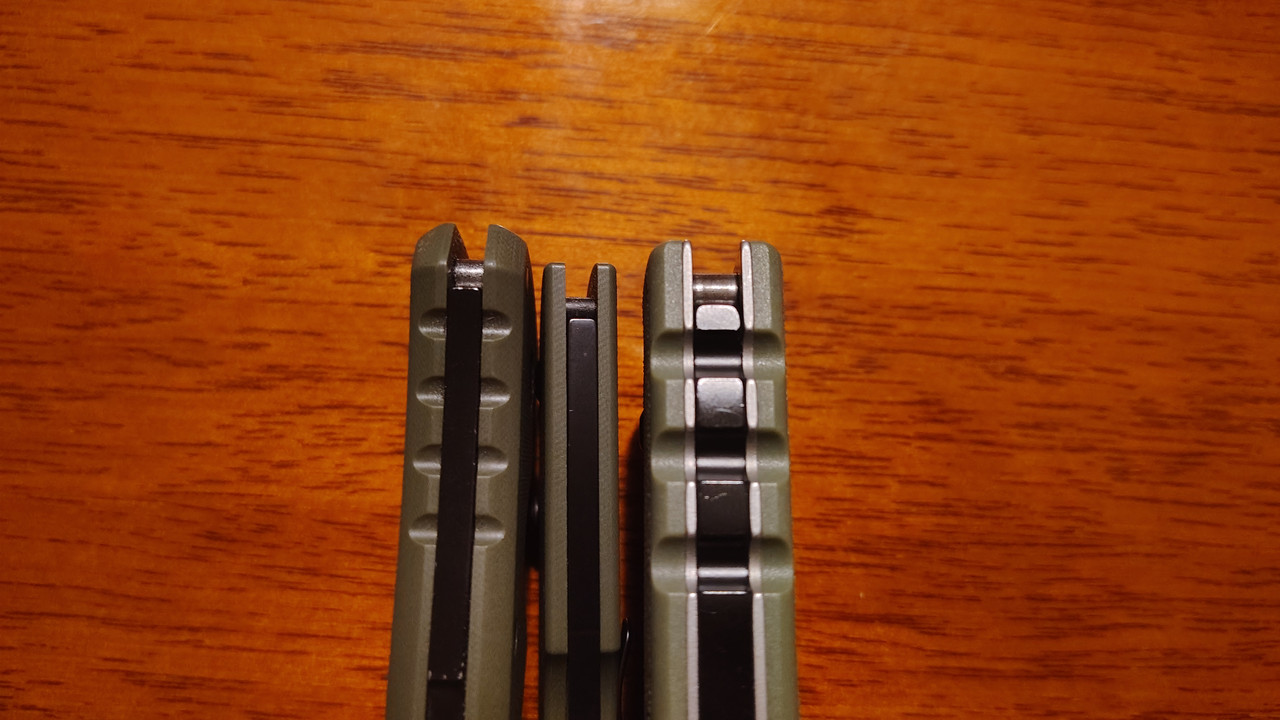
Air Lite VS Buck 110 and Mercator K55
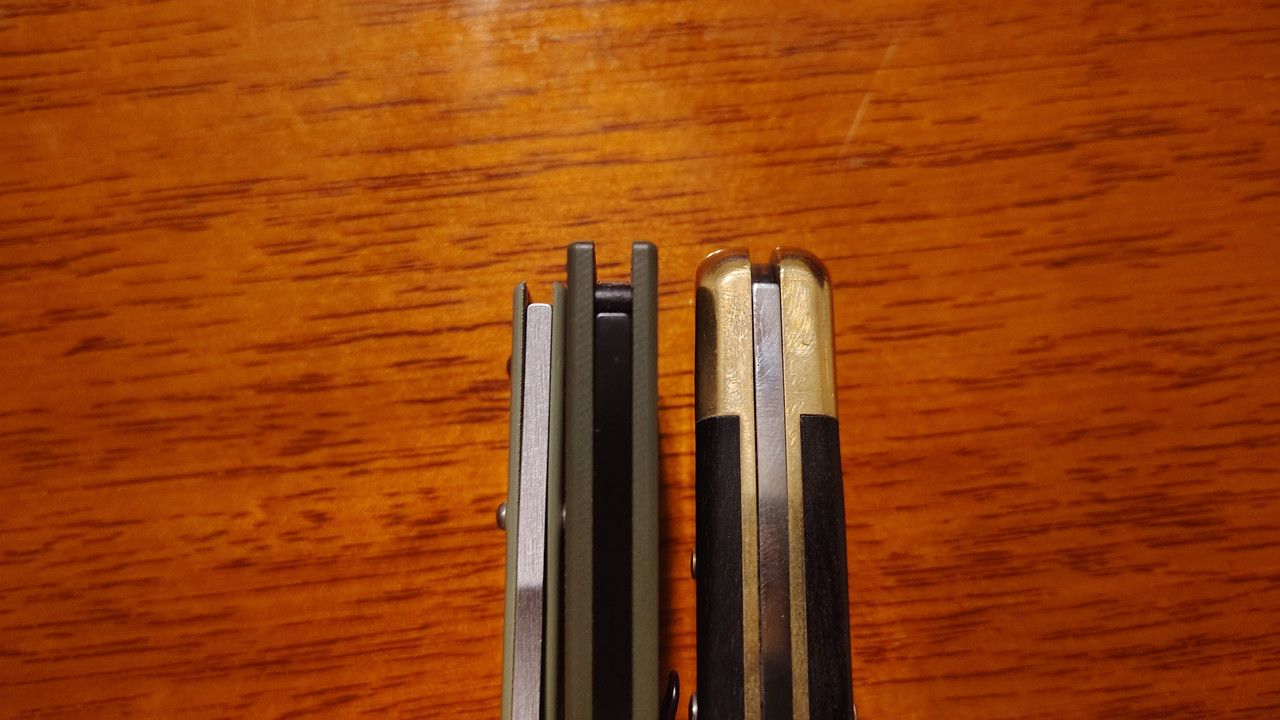
Air Lite VS Police 3 and American Lawman
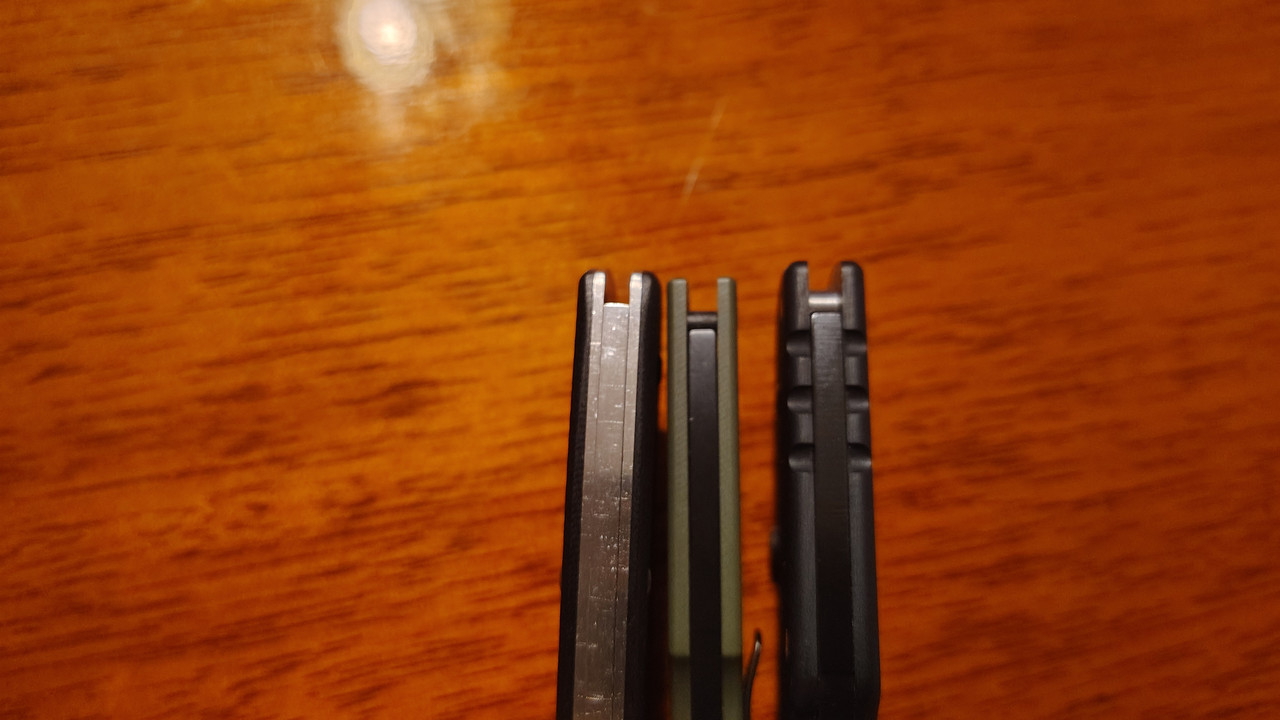
One last thing to touch on - closing the knife.
Now a lot has been said in general discussion about how a kick needs to be of a certain size for people to use a certain closing method popular with lockbacks - one I don't particularly understand the fascination with.
This knife works just fine for that closing method:
It works well using my preferred closing method for lockbacks:
And, unsurprisingly, it's a bit tricky to close without your fingers in the path of the blade closing, like most all tri-ad lock knives:
Which is fine with me. Like I said I prefer closing them with my index finger guiding the blade shut. I like how deep tri-ad locks engage and would gladly sacrifice some ease of closing for that lock security.
I've taken apart a lot of lockbacks, and some Buck's and Spydercos only have 1-1.5mm of blade tang to lock face engagement under the hood. That doesn't feel very reassuring to me when doing hard piercing cuts, like poking a hole in a 5 gallon bucket.
In fact I've sold certain knives because the lock engagement was less than other examples I have of the same knife. That was the fate of the waved Pacific Salt I made. I just don't trust a lockback with a fingernails worth of engagement, and that one barely had 1mm of engagement.
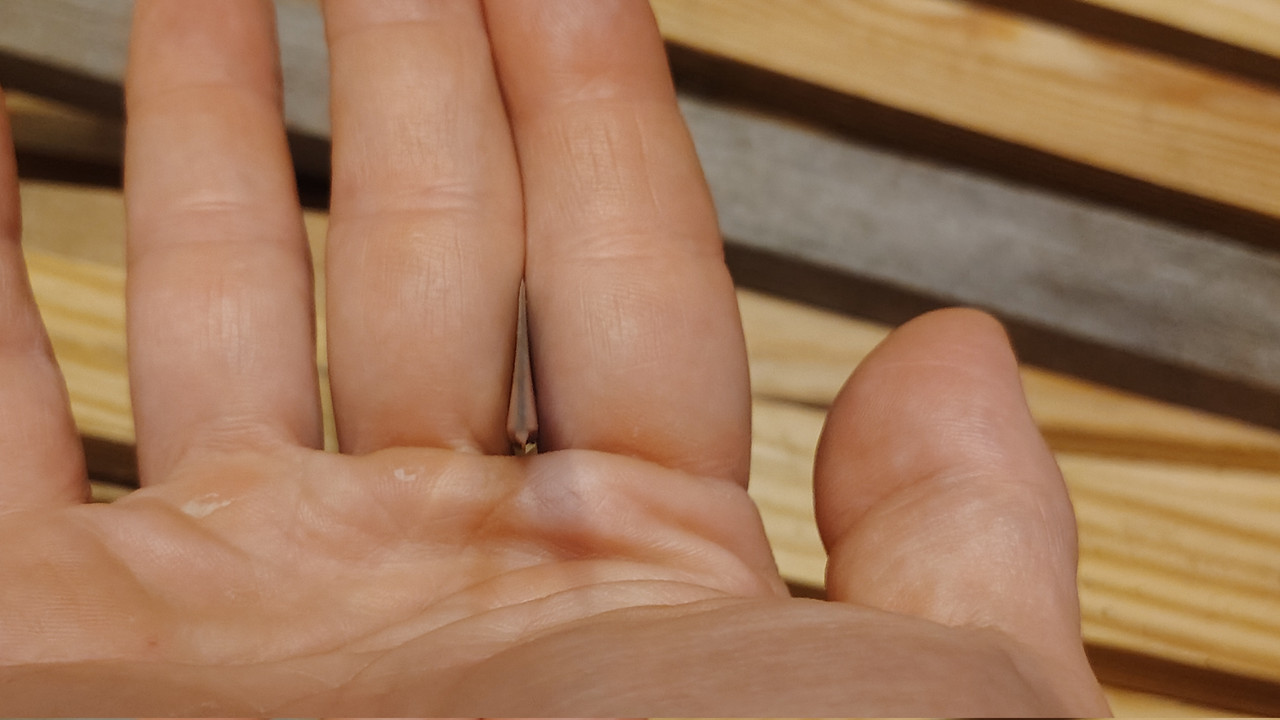
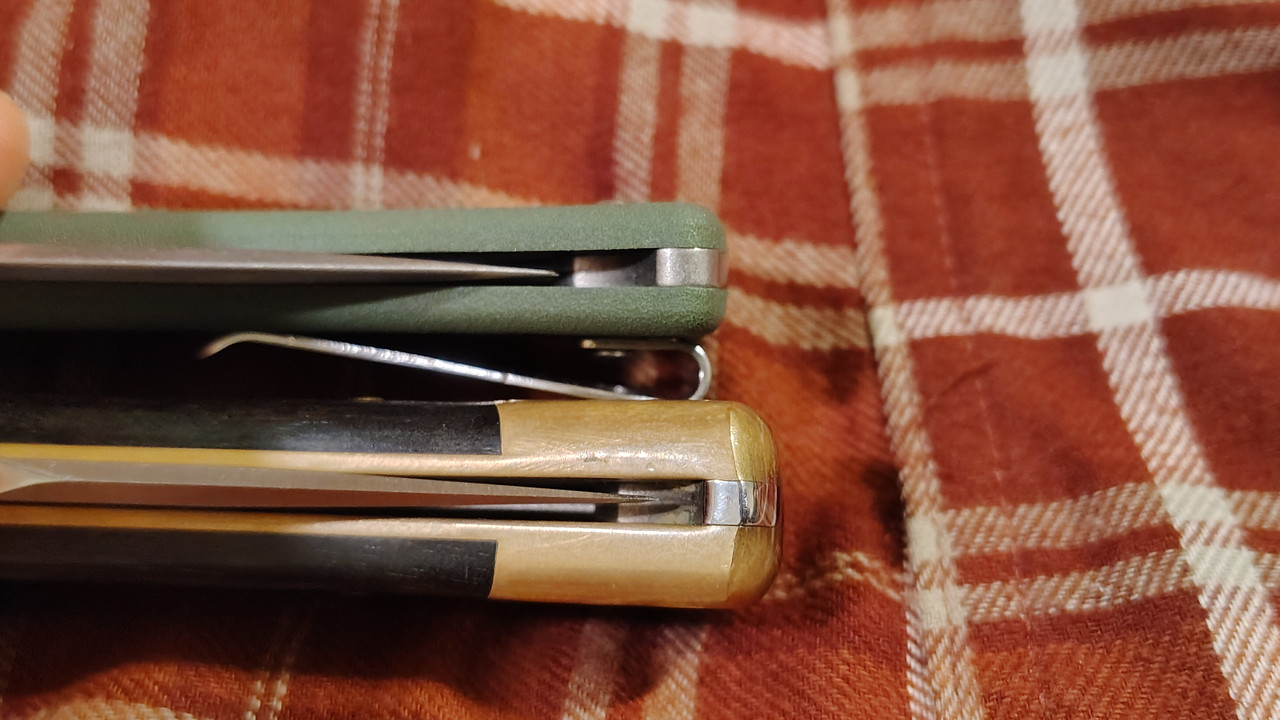
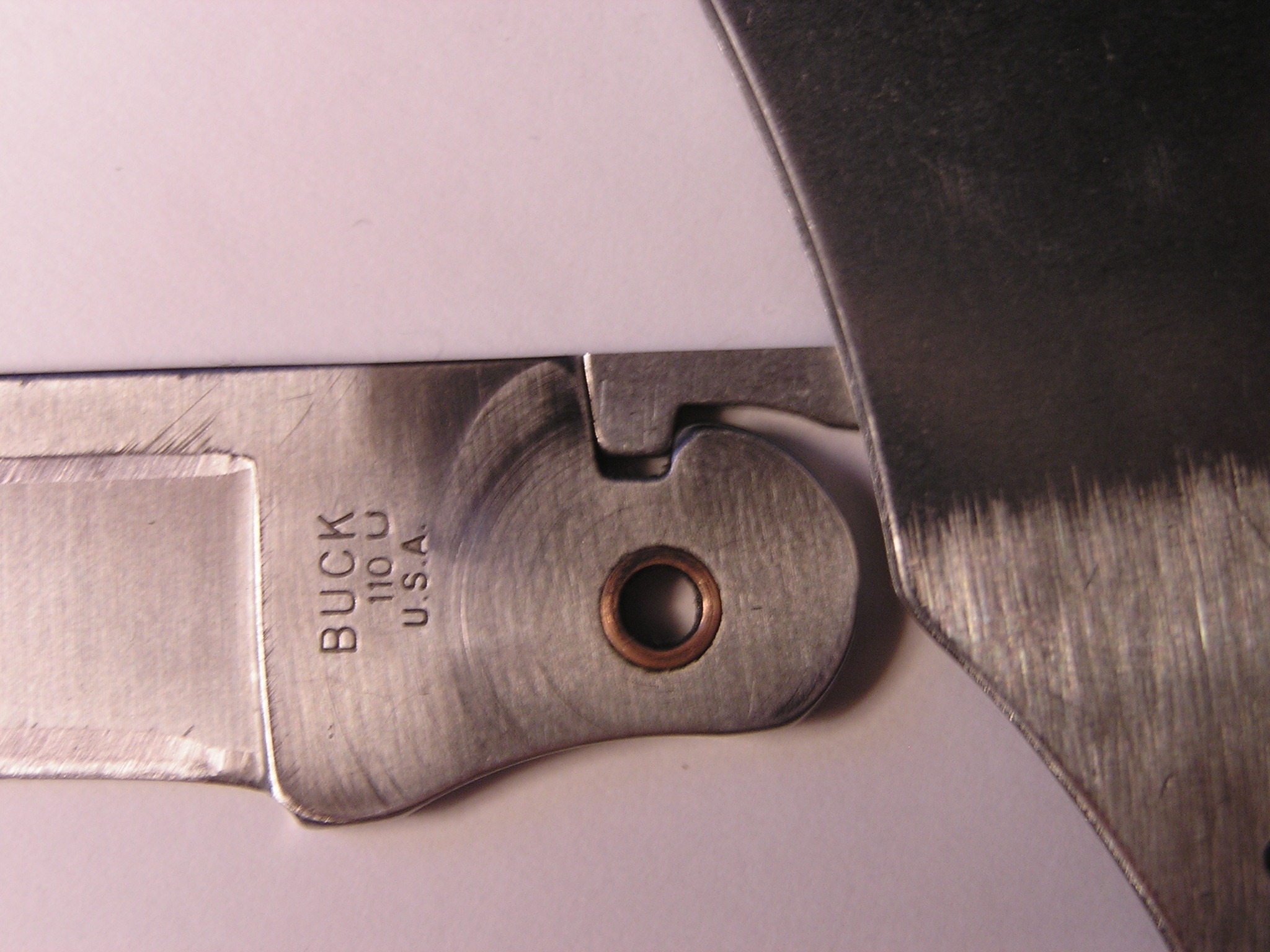
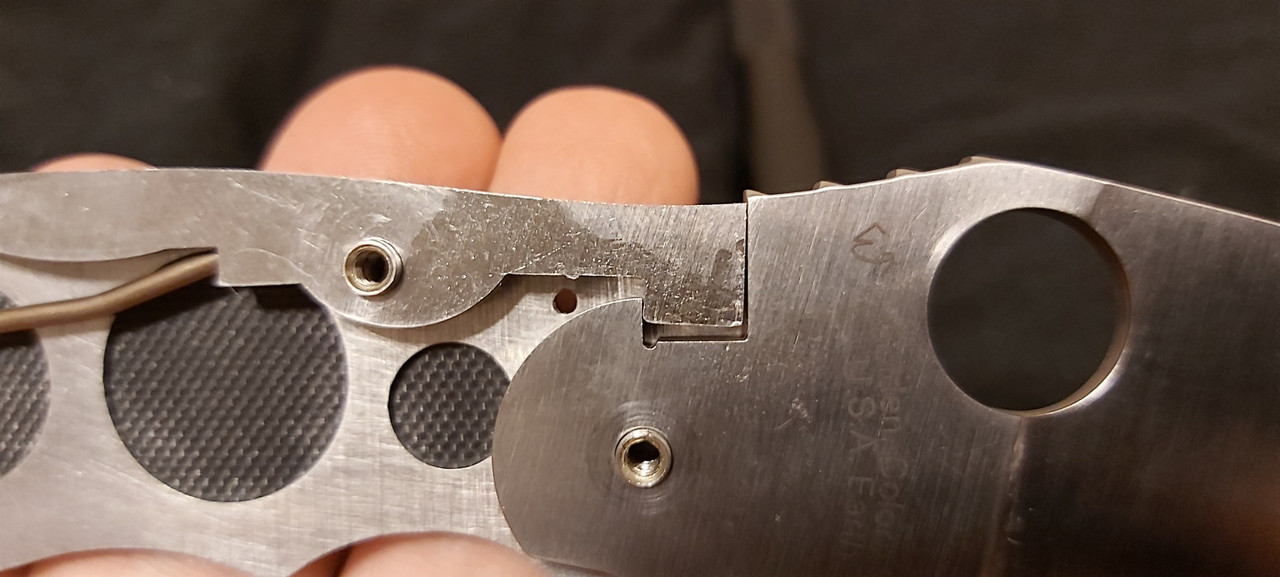
An easy way to get a ballpark idea of lock engagement is look at how high the lock bar sits right before the lock engages:
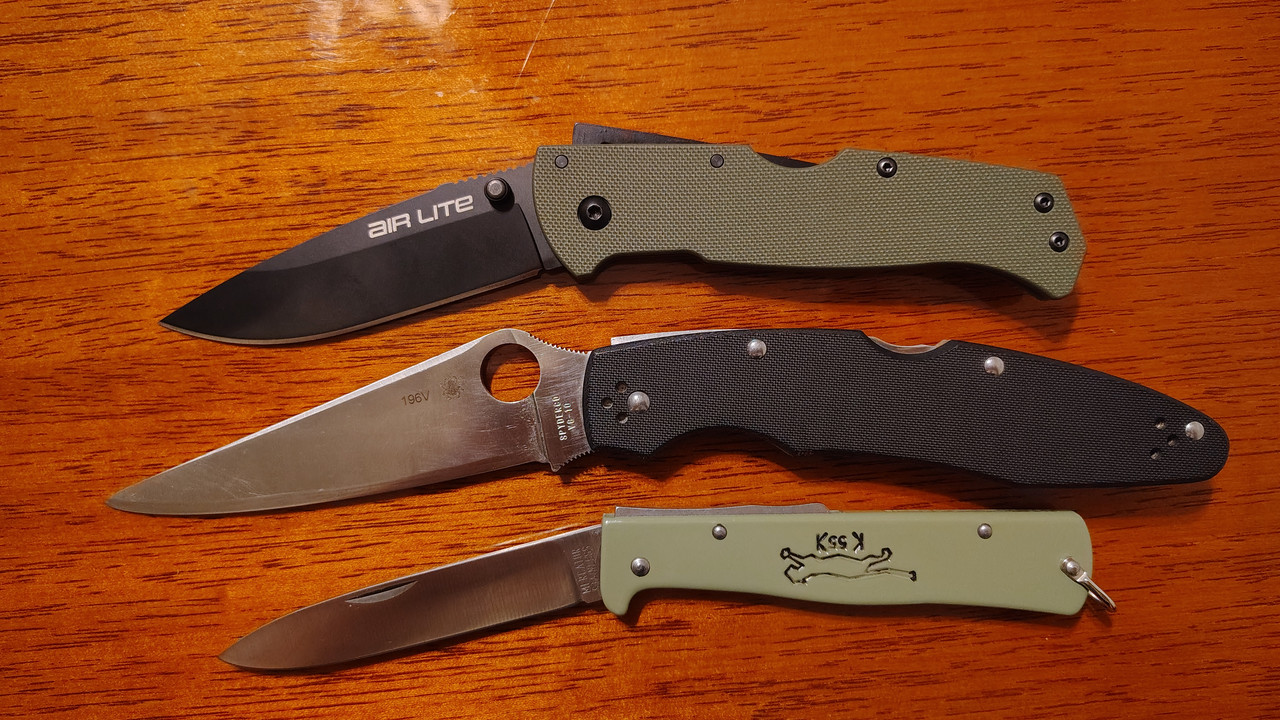
That's about 1.5-2mm for the Police 3, and around 6-7mm for the Air Lite.
Of course to truly see how much engagement is, you must take the knife apart. This just gives you a rough idea.
Most tri-ad locks have more like 5mm+ of engagement coupled with a stiffer spring, which makes for a very secure lock.
I also enjoy how tri-ads tend to exhibit zero play or lock rock. Even my BD1 Voyager XL that I've been using as a folding machete / chopper for close to a decade.
While I've learned to live with it on Spydercos, ultimately I have to question why a $250 Police folder has more blade play than a $30-40 knife from other companies.
So to sum it up, while the Air Lite didn't exactly blow me away in any one particular area, it does certain things incredibly well:
- Excellent edge to handle ratio, very little wasted space
- Minimal kick and good handle design create better leverage than 95% of lockbacks on the market
- Very thin and light, making it easy to carry
- Quality build at a very fair price
It won't be my most carried folder, but I do give it two thumbs up. I like it.